1-Chloro-4-(chloromethyl)benzene → (4-Chlorobenzyl)triphenylphosphonium chloride
Reaktionsgleichung

[C:1]1([P:7]([C:14]2[CH:19]=[CH:18][CH:17]=[CH:16][CH:15]=2)[C:8]2[CH:13]=[CH:12][CH:11]=[CH:10][CH:9]=2)[CH:6]=[CH:5][CH:4]=[CH:3][CH:2]=1.[Cl:20][C:21]1[CH:28]=[CH:27][C:24]([CH2:25]Cl)=[CH:23][CH:22]=1>C1(C)C(C)=CC=CC=1>[Cl-:20].[Cl:20][C:21]1[CH:28]=[CH:27][C:24]([CH2:25][P+:7]([C:1]2[CH:2]=[CH:3][CH:4]=[CH:5][CH:6]=2)([C:8]2[CH:13]=[CH:12][CH:11]=[CH:10][CH:9]=2)[C:14]2[CH:15]=[CH:16][CH:17]=[CH:18][CH:19]=2)=[CH:23][CH:22]=1Komponenten
4
Edukt 2
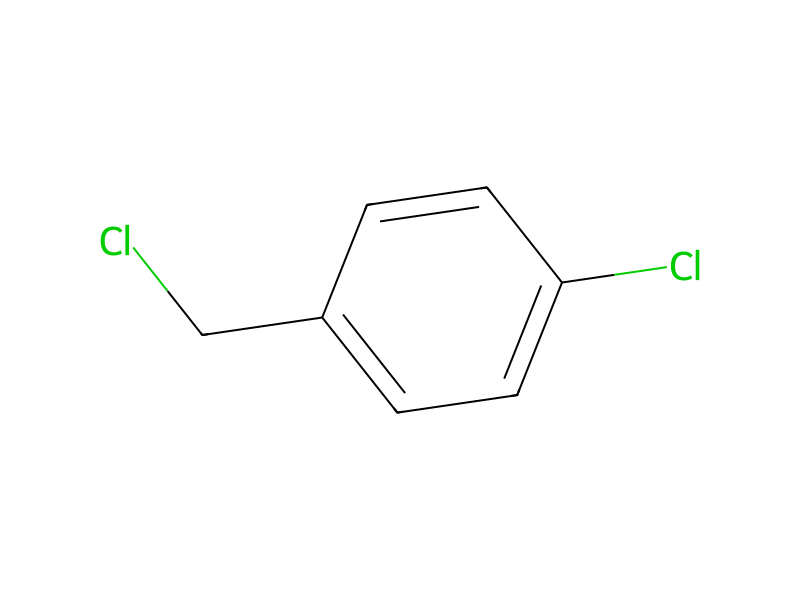

Produkt 1

Reagenzien, Katalysatoren, Lösungsmittel 1

Versuchsvorschrift
A stirred solution of 158 g, (0.6 mole) of triphenylphosphine in 800 ml of xylene is treated with 97 g of 4-chlorobenzyl chloride. The resulting solution is heated (product begins to crystallize at this point) and refluxed for six hours. After standing overnight at room temperature, the solid is filtered, washed with xylene and then with ethyl acetate, and dried in a desiccator to yield 161 g of colorless solid [(4-chlorophenyl)methyl]triphenylphosphonium chloride; m.p. 283°-285°.
Aufarbeitung
- temperatureThe resulting solution is heated (product
- customto crystallize at this point) and
- temperaturerefluxed for six hours
- filtrationthe solid is filtered
- washwashed with xylene
- dry with materialwith ethyl acetate, and dried in a desiccator
Quellen und Nachweise
- ORD-Eintrag
- ord-f2a25579520f4f199dd3dce3e4ac157b
- Quelldatensatz
- uspto-grants-1982_01
- Patentnummer
- US04311705
Notizen zur Reaktion
Wird geladen…