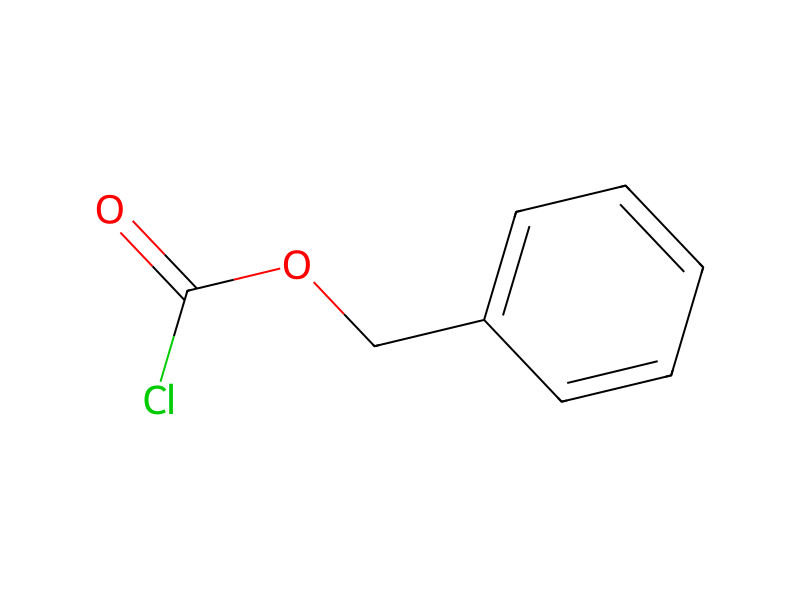
[NH2:1][C:2]1[CH:3]=[CH:4][C:5]([N:9]2[CH2:14][CH2:13][N:12]([CH2:15][CH3:16])[C:11](=[O:17])[CH2:10]2)=[C:6]([F:8])[CH:7]=1.N1C=CC=CC=1.Cl[C:25]([O:27][CH2:28][C:29]1[CH:34]=[CH:33][CH:32]=[CH:31][CH:30]=1)=[O:26]>ClCCl>[CH2:28]([O:27][C:25]([NH:1][C:2]1[CH:3]=[CH:4][C:5]([N:9]2[CH2:14][CH2:13][N:12]([CH2:15][CH3:16])[C:11](=[O:17])[CH2:10]2)=[C:6]([F:8])[CH:7]=1)=[O:26])[C:29]1[CH:34]=[CH:33][CH:32]=[CH:31][CH:30]=15-Amino-2-(4-ethyl-3-oxopiperazin-1-yl)fluorobenzene (2.95 g) was dissolved in dry dichloromethane (50 ml) under argon. Pyridine (1.26 ml) was added, and the mixture cooled to -20° C. Benzyl chloroformate (1.95 ml) was added, and the mixture stirred for 10 minutes at -20° C., before allowing the temperature to rise to ambient over 1.5 hours. Solvents were evaporated, the residue dissolved in dichloromethane and washed with sodium bicarbonate solution. After drying (MgSO4) and evaporation of solvent, the residue was chromatographed on silica, using as eluant a gradient increasing in polarity from 0 to 4% methanol in dichloromethane. Relevant fractions were combined and evaporated to give 5-benzyloxycarbonylamino-2-(4-ethyl-3-oxopiperazin-1-yl)fluorobenzene (3.3 g).