Methyl iodide → N-[1-(Methoxymethyl)-3-(1-naphthyloxy)propyl]-N-methylformamide
Reaktionsgleichung

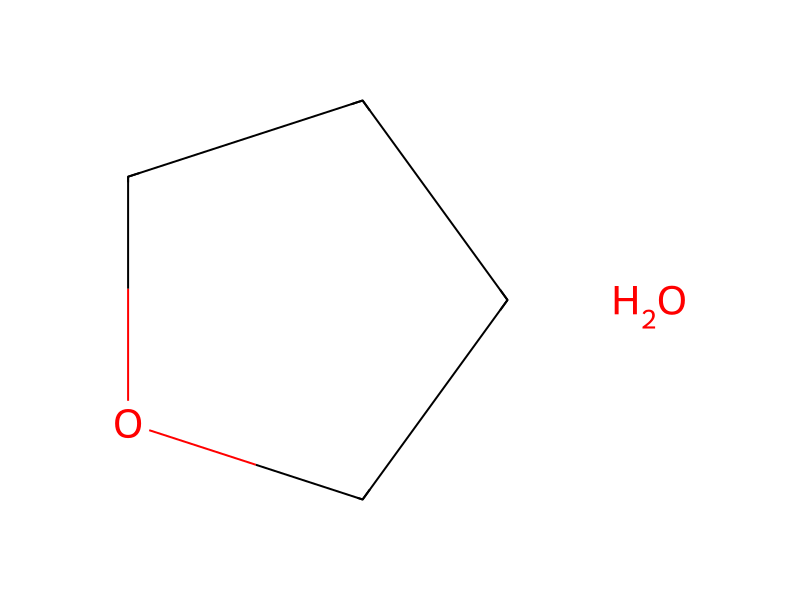
[CH:1]([O:3][CH2:4][CH:5]([NH:19][CH:20]=[O:21])[CH2:6][CH2:7][O:8][C:9]1[C:18]2[C:13](=[CH:14][CH:15]=[CH:16][CH:17]=2)[CH:12]=[CH:11][CH:10]=1)=O.[H-].[Na+].CI.[CH2:26]1COCC1.O>C1COCC1>[CH3:1][O:3][CH2:4][CH:5]([N:19]([CH3:26])[CH:20]=[O:21])[CH2:6][CH2:7][O:8][C:9]1[C:18]2[C:13](=[CH:14][CH:15]=[CH:16][CH:17]=2)[CH:12]=[CH:11][CH:10]=1Komponenten





Reaktionsbedingungen
- Temperatur
- 40 °C
Versuchsvorschrift
A solution of 2-(formylamino)-4-(1-naphthyloxy)-1-butanol formate, described in Example 3, in THF (30 ml) is added dropwise to a suspension of 51% sodium hydride (600 mg) in THF (30 ml). The mixture is heated at 40° C. for one and a half hours and then cooled to room temperature. A solution of methyl iodide (2.4 g) in THF (10 ml) is added and the mixture stirred at room temperature for 18 hours. Excess sodium hydride is decomposed by the addition of THF/water (9:1). The mixture is filtered through diatomaceous earth (Celite). The filtrate is dried and evaporated to dryness. The oily residue is subjected to chromatography on silica gel. Elution with methanol-chloroform (1:30) gives the title compound, nmr (CDCl3) δ 2.05 (m, 2H), 2.85 (s, 3H), 3.35 (s, 3H), 3.6 (m, 1H), 4.15 (m, 4H), 6.75-8.35 (7H), 8.15 (s, 1H).
Aufarbeitung
- temperaturecooled to room temperature
- filtrationThe mixture is filtered through diatomaceous earth (Celite)
- customThe filtrate is dried
- customevaporated to dryness
- washElution with methanol-chloroform (1:30)
Quellen und Nachweise
- ORD-Eintrag
- ord-349dd1bb5d6640228e2335ca792cfe29
- Quelldatensatz
- uspto-grants-1978_10
- Patentnummer
- US04118511
Notizen zur Reaktion
Wird geladen…