StartseiteMCPSkillsWorkbenchOpenChem
StartseiteWorkbenchBenachrichtigungenMein Bereich
llms.txt · skill.md · MCP-AnleitungDatenschutz · Nutzungsbedingungen · Supportv1.8.5
  1. Startseite
  2. /Reaktion

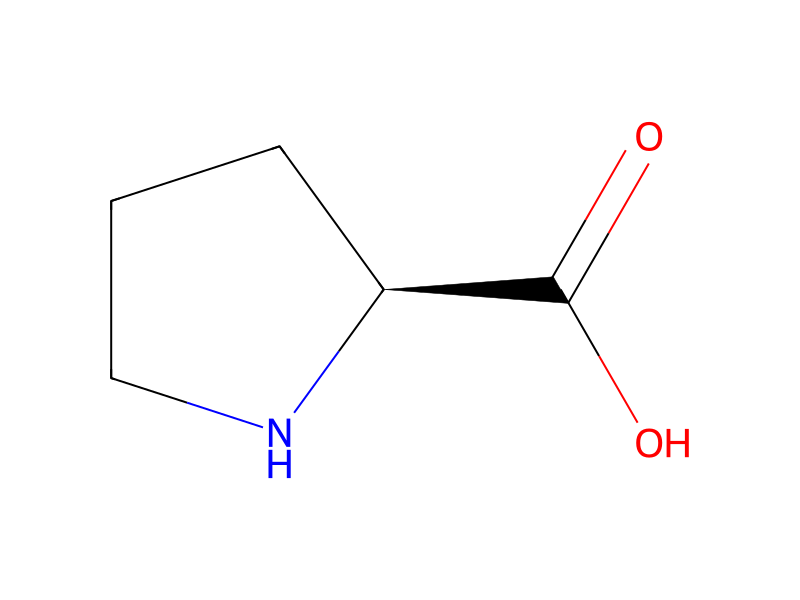
L-Proline → (S)-6,7-dichloro-1,2,3,11a-tetrahydro-5H-pyrrolo[2,1-c][1,4]benzodiazepine-5,11(10H)-dione

HRID 1154466
Drucken

Reaktionsgleichung

[Cl:1][C:2]1[C:13]([Cl:14])=[C:6]2[C:7]([O:9][C:10](=[O:12])[NH:11][C:5]2=[CH:4][CH:3]=1)=O.[NH:15]1[CH2:22][CH2:21][CH2:20][C@H:16]1C(O)=O>CS(C)=O>[Cl:14][C:13]1[C:6]2[C:7](=[O:9])[N:15]3[CH2:22][CH2:21][CH2:20][C@H:16]3[C:10](=[O:12])[NH:11][C:5]=2[CH:4]=[CH:3][C:2]=1[Cl:1]
KomponentenVersuchsvorschriftAufarbeitungQuellen und NachweiseNotizen zur Reaktion

Komponenten

4

Edukt 2

HCID 145742L-ProlineHCID 541214315,6-Dichloroisatoic anhydride

Produkt 1

HCID 53712005(S)-6,7-dichloro-1,2,3,11a-tetrahydro-5H-pyrrolo[2,1-c][1,4]benzodiazepine-5,11(10H)-dione

Reagenzien, Katalysatoren, Lösungsmittel 1

HCID 679Dimethyl SulfoxideLösungsmittel

Versuchsvorschrift

A mixture of 22 g (94.8 mmol) of 5,6-dichloroisatoic acid anhydride, 10.85 g (94.8 mmol) of L-proline and 100 ml of dimethyl sulphoxide is heated to 90° for 0.5 hour, subsequently evaporated to dryness in a high vacuum and the residue is heated to 150° for 1 hour. By chromatography on silica gel while eluting with ethyl acetate and subsequent crystallization from ethyl acetate and hexane there is obtained (S)-6,7-dichloro-1,2,3,11a-tetrahydro-5H-pyrrolo[2,1-c][1,4]benzodiazepine-5,11(10H)-dione of melting point 203°-205° C.

Aufarbeitung

  1. temperatureis heated to 90° for 0.5 hour
  2. customsubsequently evaporated to dryness in a high vacuum
  3. temperaturethe residue is heated to 150° for 1 hour
  4. washBy chromatography on silica gel while eluting with ethyl acetate and subsequent crystallization from ethyl acetate and hexane

Quellen und Nachweise

ORD-Eintrag
ord-e4107f1ad0c04641adbf474d5a81594e
Quelldatensatz
uspto-grants-1984_12
DOI
10.6084/m9.figshare.5104873.v1
Patentnummer
US04489003

Notizen zur Reaktion

Auf dieser SeiteKomponentenVersuchsvorschriftAufarbeitungQuellen und NachweiseNotizen zur Reaktion