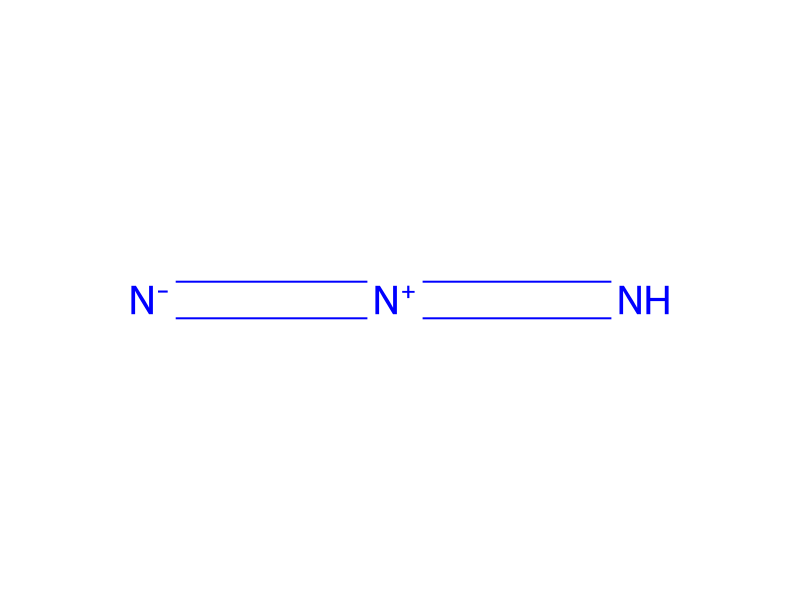
(S)-4-Hydroxy-1-[[ethoxy(4-phenylbutyl)phosphinyl]acetyl]-L-proline, methyl ester (2.0 g), triphenylphosphine (2.57 g), 2.1 N hydrazoic acid/benzene (12 ml, >5 equivalents) and dry acetonitrile are stirred under argon at room temperature for 30 minutes. Diethylazocarboxylate (1.71 g) in acetonitrile (5 ml) is added dropwise over 30 minutes. After 18 hours the reaction is still incomplete (as shown by thin-layer chromatography) and triphenylphosphine (1 equivalent), diethylazocarboxylate (1 equivalent) and 2.1 N hydrazoic acid (6 ml) are added. After 4 hours the reaction is complete. Nitrogen is bubbled through the solution to remove excess hydrazoic acid and the solvent is stripped leaving an oil. The oil is chromatographed on 100 mg of silica gel, eluting first with ethyl acetate and then with 3% methanol/ethyl acetate to give 1.64 g of the title compound.