Isopropanol → Isopropyl glycerol ether
HRID 1158590
Reaktionsgleichung

[Na].[CH2:2]1[O:4][CH:3]1[CH2:5][OH:6].[CH:7]([OH:10])([CH3:9])[CH3:8]>>[CH:7]([O:10][CH2:2][CH:3]([OH:4])[CH2:5][OH:6])([CH3:9])[CH3:8]Komponenten
4

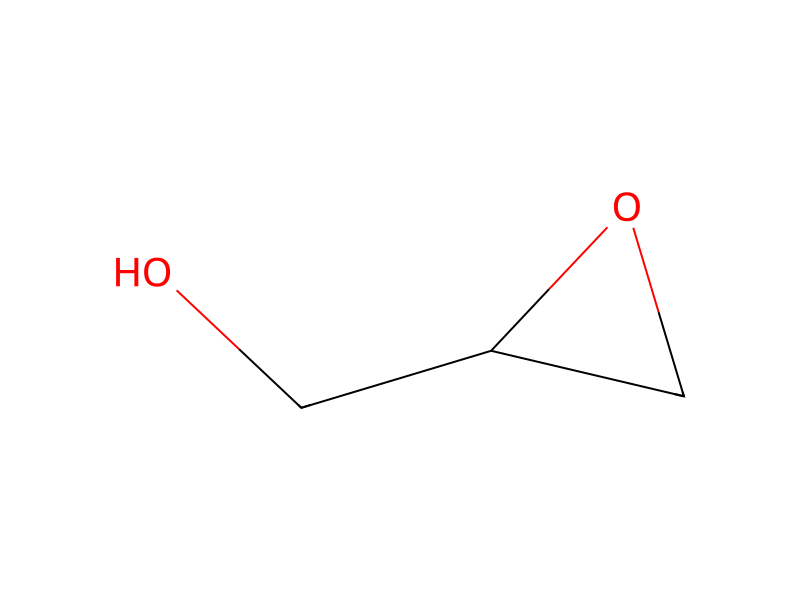


Reaktionsbedingungen
- Temperatur
- 80 °C
Versuchsvorschrift
Into a 3-L separable flask equipped with a stirrer and a condenser, 1200 g of isopropanol was introduced. Then 4.6 g of sodium was added and heated to 80° C. to dissolve. After complete dissolution of the sodium, 300 g of glycidol was dropped at 80° C. over 1 hour. After completion of the dropping, stirring was conducted for 3 hours. Then the stirring was stopped and the mixture was cooled to room temperature. At this time, the mixture separated into an upper layer and a lower layer. The upper layer was isolated and concentrated by an evaporator. Furthermore, 3-isopropoxy-1,2-propanediol (boiling point: 60° C./2 mmHg) was obtained through distillation under reduced pressure. 3-Isopropoxy-1,2-propanediol thus obtained is a model compound in the case where one molecule of glycidol reacted with a hydroxyl group of EVOH.