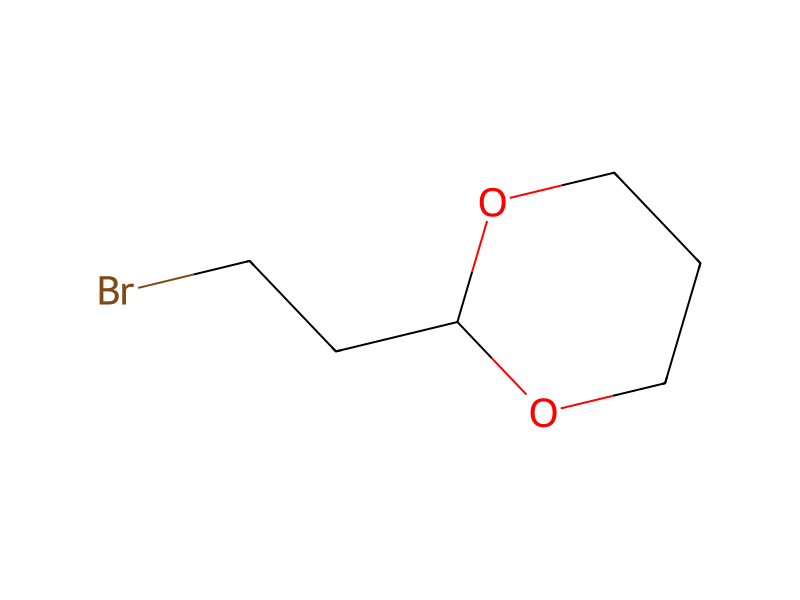
[C:1]([C:5]1[CH:6]=[C:7]([OH:11])[CH:8]=[CH:9][CH:10]=1)([CH3:4])([CH3:3])[CH3:2].Br[CH2:13][CH2:14][CH:15]1[O:20][CH2:19][CH2:18][CH2:17][O:16]1.C(=O)([O-])[O-].[K+].[K+]>C(#N)C>[C:1]([C:5]1[CH:6]=[C:7]([CH:8]=[CH:9][CH:10]=1)[O:11][CH2:13][CH2:14][CH:15]1[O:20][CH2:19][CH2:18][CH2:17][O:16]1)([CH3:4])([CH3:2])[CH3:3]3-tert-butyl-phenol (1.50 g, 10 mmol), 2-(2-bromo-ethyl)-[1,3]dioxane (1.38 g, 10 mmol) and potassium carbonate (2.15 g, 11 mmol) in 20 ml acetonitrile was heated to reflux for 16 hours. After cooling, the solvent was removed under reduced pressure and the residue partitioned between diethyl ether and water. The isolated organic layer was washed with water, dried with magnesium sulfate, filtered and the solvent removed under reduced pressure to give 2.97 g of crude 2-[2-(3-tert-butyl-phenoxy)-ethyl]-[1,3]dioxane, which was used without further purification.
Wird geladen…