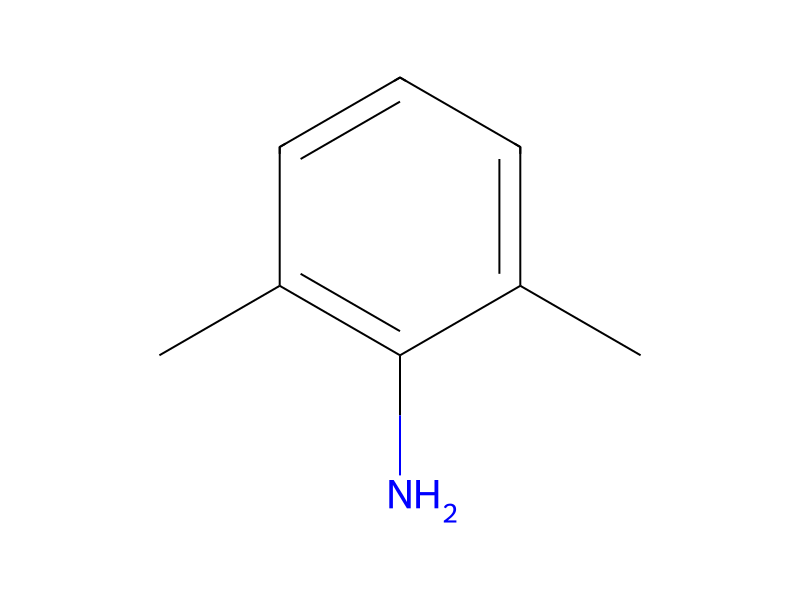
Br[CH:2]([CH3:13])[CH2:3][NH:4][C:5]1[C:10]([CH3:11])=[CH:9][CH:8]=[CH:7][C:6]=1[CH3:12].[CH3:14][C:15]1[CH:21]=[CH:20][CH:19]=[C:18]([CH3:22])[C:16]=1[NH2:17]>[I-].[K+].Cl>[CH3:12][C:6]1[CH:7]=[CH:8][CH:9]=[C:10]([CH3:11])[C:5]=1[NH:4][CH2:3][CH:2]([NH:17][C:16]1[C:18]([CH3:22])=[CH:19][CH:20]=[CH:21][C:15]=1[CH3:14])[CH3:13]A mixture of 106.8 g (0.441 moles) of N-(β-bromopropyl)-2,6-dimethyl-aniline, obtained as described in point (a) above, 110 ml (107.4 g, 0.88 moles) of 2,6-dimethyl-aniline and 1.6 g (10 mmoles) of potassium iodide is stirred at 100° to 105° C. for 3 hours under nitrogen atmosphere. The mixture is allowed to cool, 600 ml of 10% aqueous hydrochloric acid are added, and the resulting mixture is allowed to stand at room temperature overnight. The separated precipitate, which is a mixture of the hydrochloride and the hydrobromide of the expected product, is filtered off, washed with water, dried, and then treated as described in point (b) of Method (b) above in order to liberate the base. In this way 93.8 g (75.3%) of 1,2-bis(2',6'-dimethylphenyl-amino)-propane are obtained; m.p.: 54°-56° C.