StartseiteMCPWorkbenchSkills
StartseiteWorkbenchBenachrichtigungenMein Bereich
llms.txt · MCP-AnleitungDatenschutz · Nutzungsbedingungen · Supportv1.8.0
  1. Startseite
  2. /Reaktion

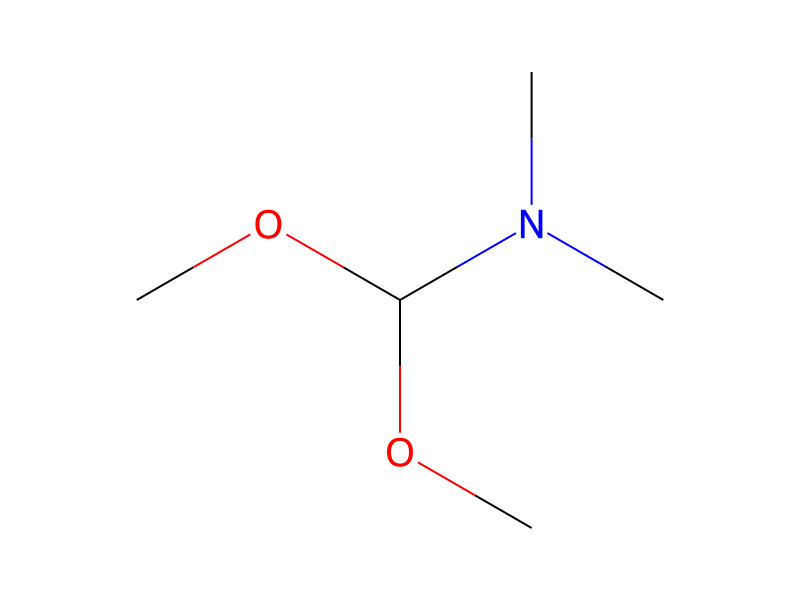
Dimethylformamide dimethyl acetal → 1H-Pyrazole-4-carboxylic acid, 5-cyclopropyl-1-(5-quinolinyl)-

HRID 1168739
Notizen
Druckvorschau

Reaktionsgleichung

Reaktionsgleichung von HRID 1168739
COC(=O)CC(C1CC1)=O.COC(OC)N(C)C.CN(/C=C(/C(=O)C1CC1)\C(OC)=O)C.Cl.Cl.N(C1C=CC=C2C=1C=CC=N2)N.C[O:48][C:49]([C:51]1[CH:52]=[N:53][N:54]([C:59]2[CH:68]=[CH:67][CH:66]=[C:65]3[C:60]=2[CH:61]=[CH:62][CH:63]=[N:64]3)[C:55]=1[CH:56]1[CH2:58][CH2:57]1)=[O:50]>C(OCC)(=O)C.C(N(CC)CC)C>[CH:56]1([C:55]2[N:54]([C:59]3[CH:68]=[CH:67][CH:66]=[C:65]4[C:60]=3[CH:61]=[CH:62][CH:63]=[N:64]4)[N:53]=[CH:52][C:51]=2[C:49]([OH:50])=[O:48])[CH2:57][CH2:58]1
KomponentenReaktionsbedingungenVersuchsvorschriftAufarbeitungQuellen und NachweiseNotizen zur Reaktion

Komponenten

8

Edukt 5

HCID 78373Dimethylformamide dimethyl acetalHCID 101300163-Cyclopropyl-3-Oxopropionic Acid Methyl EsterHCID 11401341alpha-[(Dimethylamino)methylene]-beta-oxo-cyclopropanepropanoic Acid Methyl Ester;Methyl 2-(Cyclopropylcarbonyl)-3-(dimethylamino)acrylate; Methyl 2-(Cyclopropylcarbonyl)-3-(dimethylamino)prop-2-enoateHCID 11449248Methyl 5-cyclopropyl-1-(5-quinolyl)pyrazole-4-carboxylateHCID 12334107
5-Hydrazinoquinoline dihydrochloride

Produkt 1

HCID 113004451H-Pyrazole-4-carboxylic acid, 5-cyclopropyl-1-(5-quinolinyl)-

Reagenzien, Katalysatoren, Lösungsmittel 2

HCID 8471TriethylamineLösungsmittelHCID 8857Ethyl AcetateLösungsmittel2×

Reaktionsbedingungen

Temperatur
75 °C

Versuchsvorschrift

A 200 liter glass-lined reactor under nitrogen was charged with ethyl acetate (51 liters), methyl-3-cyclopropyl-3-oxopropanoate (4.90 kg) and N,N-dimethylformamide dimethylacetal (4.31 kg). The reactor was heated to about 75° C. for four hours. Completion of conversion to α-[(dimethylamino)methylene]-β-oxo-cyclopropanepropanoic acid, (αZ)-methyl ester was confirmed using thin-layer chromatography analysis (ethyl acetate/hexanes,1/1). The reactor was cooled to about 20° C. and the vessel was charged with 5-hydrazinoquinoline dihydrochloride (10.0 kg). Triethylamine (15.0 liters) was added to the reactor over about a one hour period. The reactor was then heated to about 75° C. under nitrogen and maintained at that temperature for four hours. Completion of the formation of 5-cyclopropyl-1-quinolin-5-yl-1H-pyrazole-4-carboxylic acid methyl ester was confirmed by HPLC. The reactor was then cooled to about 20° C. and ethyl acetate (17 liters) was added along with activated carbon (500 g) and filter aid (1.64 kg). A solution consisting of 66 liters of water and citric acid (20.7 kg) was then added. The resulting suspension was agitated for one hour and then filtered. The filter was rinsed with 15 liters of ethyl acetate. The filtrate formed two liquid layers upon standing. The lower, dark red aqueous layer was decanted and discarded. The upper, red organic layer was transferred to a 200 liter glass-lined reactor configured for vacuum distillation. The volume of the red organic layer was reduced by distillation under vacuum to a volume of 25 liters. Propan-2-ol (31 liters) was added to the distillation pot and the volume was reduced by vacuum distillation to 31 liters. A second propan-2-ol (31 liters) charge was made to the distillation pot and the volume was again reduced by vacuum distillation to 34 liters. The distillation apparatus was cooled to about 20° C. and reconfigured for reflux. Aqueous NaOH (50% solution, 6.90 kg) was added to the reconfigured apparatus containing the 5-cyclopropyl-1-quinolin-5-yl-1H-pyrazole-4-carboxylic acid methyl ester/isopropanol solution. The reactor was then heated to about 75° C. under nitrogen and maintained at that temperature for four hours. HPLC analysis of the reaction solution indicated that the conversion to 5-cyclopropyl-1-quinolin-5-yl-1H-pyrazole-4-carboxylic acid was complete. The reactor was then cooled to about 20° C. and the pH of the contents was adjusted to about pH 4 using concentrated hydrochloric acid. A brown suspension of solids formed as the pH was adjusted. The solids were isolated by filtration, rinsed with water and dried under vacuum at about 45° C. resulting in 6.10 kg of 5-cyclopropyl-1-quinolin-5-yl-1H-pyrazole-4-carboxylic acid as a brown solid.

Aufarbeitung

  1. temperatureThe reactor was cooled to about 20° C.
  2. temperatureThe reactor was then heated to about 75° C. under nitrogen
  3. temperaturemaintained at that temperature for four hours
  4. temperatureThe reactor was then cooled to about 20° C.
  5. filtrationfilter aid (1.64 kg)
  6. additionwas then added
  7. filtrationfiltered
  8. washThe filter was rinsed with 15 liters of ethyl acetate
  9. customThe filtrate formed two liquid layers
  10. customThe lower, dark red aqueous layer was decanted
  11. customThe upper, red organic layer was transferred to a 200 liter glass-lined reactor
  12. distillationconfigured for vacuum distillation
  13. distillationThe volume of the red organic layer was reduced by distillation under vacuum to a volume of 25 liters
  14. additionPropan-2-ol (31 liters) was added to the distillation pot and the volume
  15. distillationwas reduced by vacuum distillation to 31 liters
  16. additionA second propan-2-ol (31 liters) charge
  17. distillationwas again reduced by vacuum distillation to 34 liters
  18. temperatureThe distillation apparatus was cooled to about 20° C.
  19. temperaturefor reflux
  20. additionAqueous NaOH (50% solution, 6.90 kg) was added to the reconfigured apparatus
  21. additioncontaining the 5-cyclopropyl-1-quinolin-5-yl-1H-pyrazole-4-carboxylic acid methyl ester/isopropanol solution
  22. temperatureThe reactor was then heated to about 75° C. under nitrogen
  23. temperaturemaintained at that temperature for four hours
  24. temperatureThe reactor was then cooled to about 20° C.
  25. additionA brown suspension of solids
  26. customformed as the pH
  27. customThe solids were isolated by filtration
  28. washrinsed with water
  29. customdried under vacuum at about 45° C.
  30. customresulting in 6.10 kg of 5-cyclopropyl-1-quinolin-5-yl-1H-pyrazole-4-carboxylic acid as a brown solid

Quellen und Nachweise

ORD-Eintrag
ord-5bfa3b2458cf4f75a6d7db6bb9f00ad3
Quelldatensatz
uspto-grants-2003_09
DOI
10.6084/m9.figshare.5104873.v1
Patentnummer
US06627643B2

Notizen zur Reaktion

Wird geladen…

Auf dieser SeiteKomponentenReaktionsbedingungenVersuchsvorschriftAufarbeitungQuellen und NachweiseNotizen zur Reaktion

