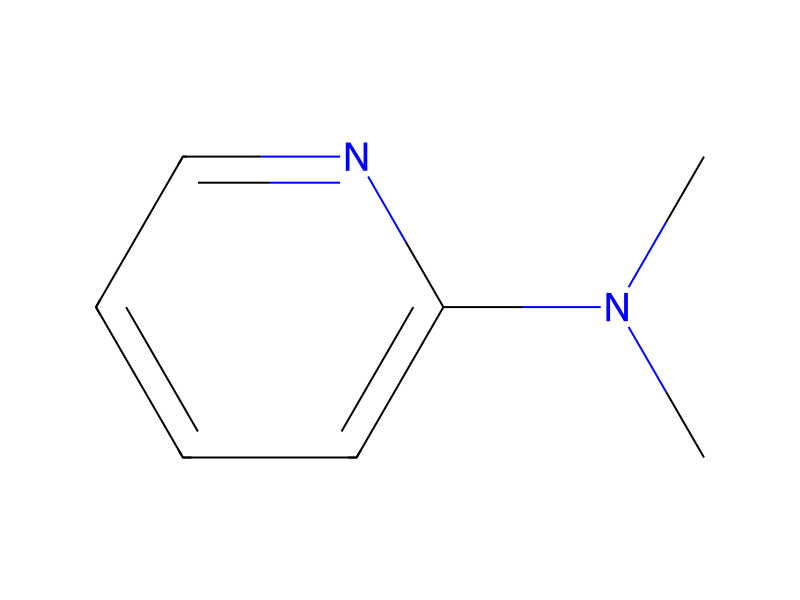
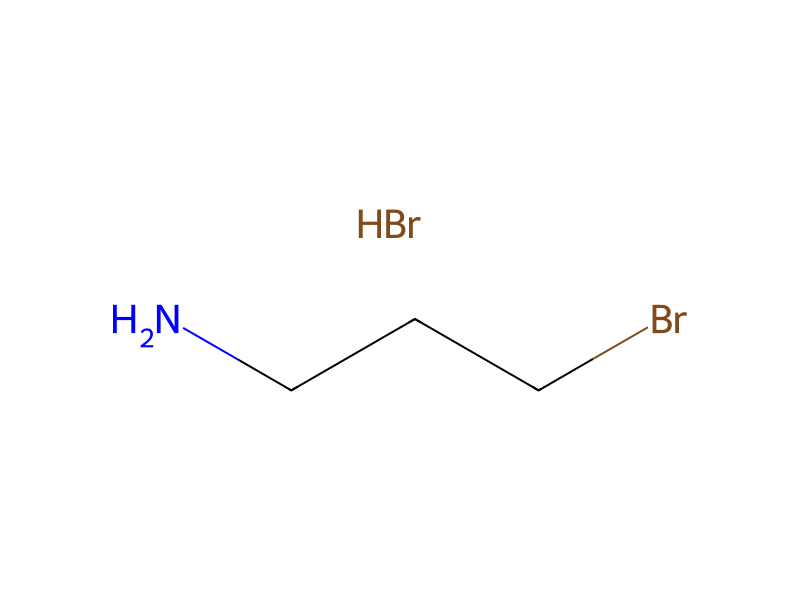
Br.[Br:2][CH2:3][CH2:4][CH2:5][NH2:6].CN(C1C=CC=CN=1)C.[C:16]([C:18]1[CH:19]=[C:20]([S:24](Cl)(=[O:26])=[O:25])[CH:21]=[CH:22][CH:23]=1)#[N:17].C(N(CC)CC)C>ClCCl>[Br:2][CH2:3][CH2:4][CH2:5][NH:6][S:24]([C:20]1[CH:21]=[CH:22][CH:23]=[C:18]([C:16]#[N:17])[CH:19]=1)(=[O:26])=[O:25]A suspension of bromopropylamine hydrogen bromide (0.219 g, 1 mmol) in dichloromethane (2 ml) is treated with a solution of dimethylaminopyridine (0.004 g) in dichloromethane (0.5 ml) followed by a solution of 3-cyano-benzenesulfonyl chloride (0.2 g, 1.0 mmol) in dichloromethane (0.5 ml). Triethylamine (0.3 ml, 2.16 mmol) is added and the reaction mixture stirred at ambient temperature for 2 hours, then quenched with water and saturated aqueous NaHCO3, and extracted into dichloromethane. The organic phase is washed with aqueous 1M HCl solution and brine, dried over MgSO4 and evaporated to afford crude N-(3-bromopropyl)-3-cyano-benzenesulfonamide. (13C NMR, 100 MHz, CDCl3, 30.2, 32.6, 41.9, 114.3, 117.5, 130.7, 130.9, 131.1, 136.3, 142.1).