Reaktionsgleichung

[OH:1][C:2]1[C:9]([N+:10]([O-:12])=[O:11])=[CH:8][C:5]([CH:6]=O)=[CH:4][C:3]=1[O:13][CH3:14].[CH3:15][O:16][C:17]1[CH:18]=[C:19]([C:27](=[O:29])[CH3:28])[CH:20]=[C:21]([O:25][CH3:26])[C:22]=1[O:23][CH3:24]>>[OH:1][C:2]1[C:9]([N+:10]([O-:12])=[O:11])=[CH:8][C:5]([CH:6]=[CH:28][C:27]([C:19]2[CH:20]=[C:21]([O:25][CH3:26])[C:22]([O:23][CH3:24])=[C:17]([O:16][CH3:15])[CH:18]=2)=[O:29])=[CH:4][C:3]=1[O:13][CH3:14]Komponenten
3

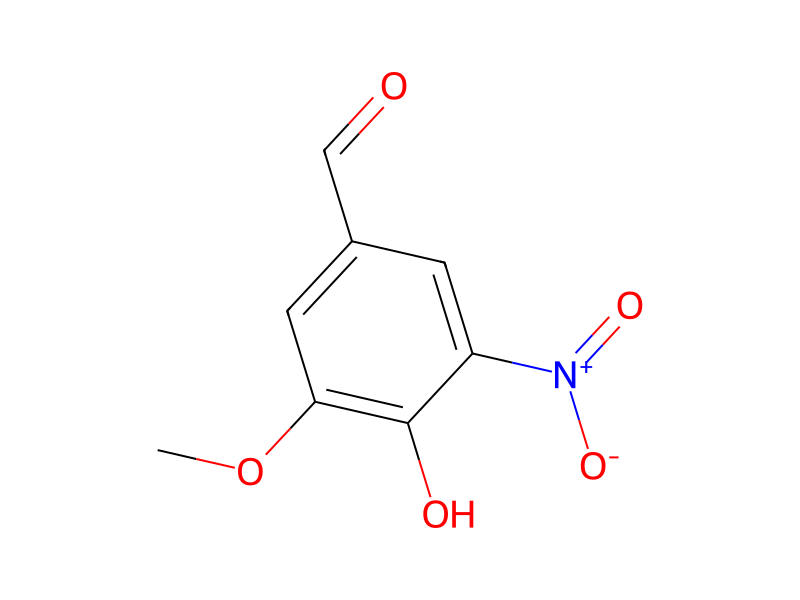

Versuchsvorschrift
The procedure described in Example 8 was repeated by using 2.0 g of 4-hydroxy-3-methoxy-5-nitrobenzaldehyde and 2.1 g of 3',4',5'-trimethoxyacetophenone. Yield 2.2 g (57%), m.p. 123°-125° C.
Quellen und Nachweise
- ORD-Eintrag
- ord-558a33cba7124c36b52fb7324928c1c1
- Quelldatensatz
- uspto-grants-1992_05
- Patentnummer
- US05112861
Verknüpfte Notizen
Wird geladen…