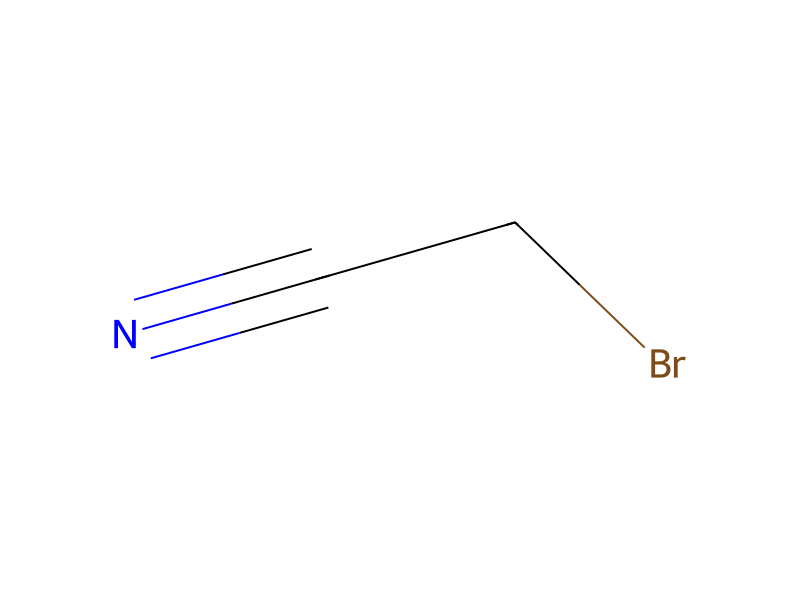
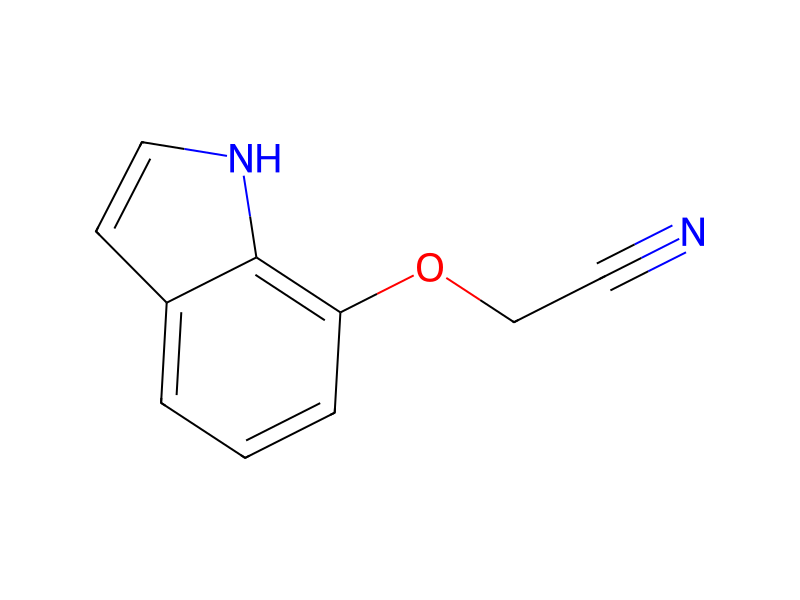
The protected 7-substituted indole (Example 34a part ii) (0.53 g, 1.75 mmol) in methanol (10 ml) and toluene (10 ml) was hydrogenated in a Parr apparatus at 50 p.s.i. for 1 hour in the presence of Pearlman's catalyst (0.33 g). The reaction mixture was filtered through Celite and the filtrate evaporated in vacuo. The crude 7-hydroxy indole was taken up in methyl ethyl ketone (20 ml), and bromoacetonitrile (0.65 g, 5.25 mmol) and anhydrous potassium carbonate (0.6 g, 4.35 mmol) added. The mixture was refluxed under nitrogen for 1 hour, cooled, poured into 2.5M hydrochloric acid/ice and extracted into dichloromethane. The organic phase was washed with water, dried, filtered and evaporated in vacuo.