StartseiteMCPWorkbenchSkills
StartseiteWorkbenchBenachrichtigungenMein Bereich
llms.txt · MCP-AnleitungDatenschutz · Nutzungsbedingungen · Supportv1.8.3
  1. Startseite
  2. /Reaktion

Dicyclohexylcarbodiimide → (4R)-3-Benzoyl-4-[(R)-alpha-methyl-p-hydroxybenzylcarbamoyl]-1,1-dioxothiazolidine

HRID 1200160
Drucken

Reaktionsgleichung

Reaktionsgleichung von HRID 1200160
[CH3:1][C@@H:2]([NH2:10])[C:3]1[CH:8]=[CH:7][C:6]([OH:9])=[CH:5][CH:4]=1.O.ON1C2C=CC=CC=2N=N1.C1(N=C=NC2CCCCC2)CCCCC1.[C:37]([N:45]1[C@H:49]([C:50](O)=[O:51])[CH2:48][S:47](=[O:54])(=[O:53])[CH2:46]1)(=[O:44])[C:38]1[CH:43]=[CH:42][CH:41]=[CH:40][CH:39]=1>CN(C)C=O>[C:37]([N:45]1[C@H:49]([C:50](=[O:51])[NH:10][C@H:2]([CH3:1])[C:3]2[CH:8]=[CH:7][C:6]([OH:9])=[CH:5][CH:4]=2)[CH2:48][S:47](=[O:53])(=[O:54])[CH2:46]1)(=[O:44])[C:38]1[CH:39]=[CH:40][CH:41]=[CH:42][CH:43]=1
KomponentenReaktionsbedingungenVersuchsvorschriftAufarbeitungQuellen und NachweiseNotizen zur Reaktion

Komponenten

6

Edukt 4

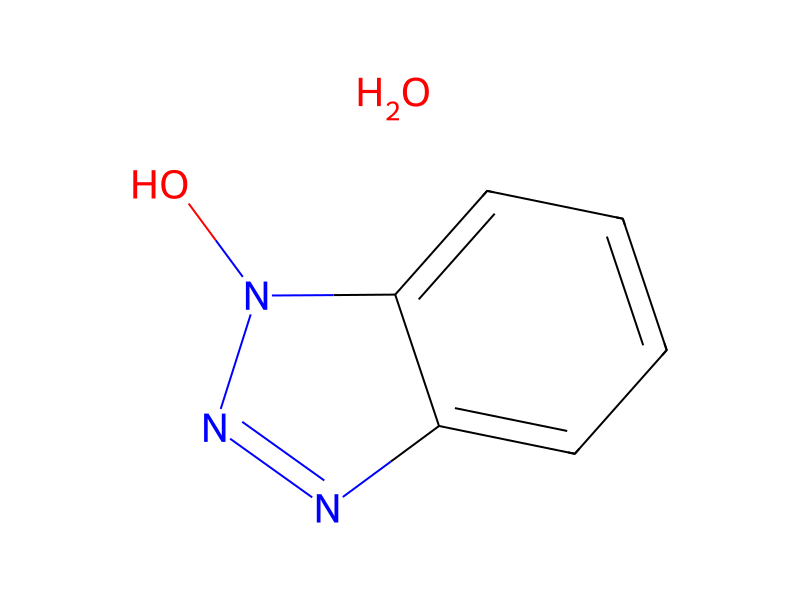
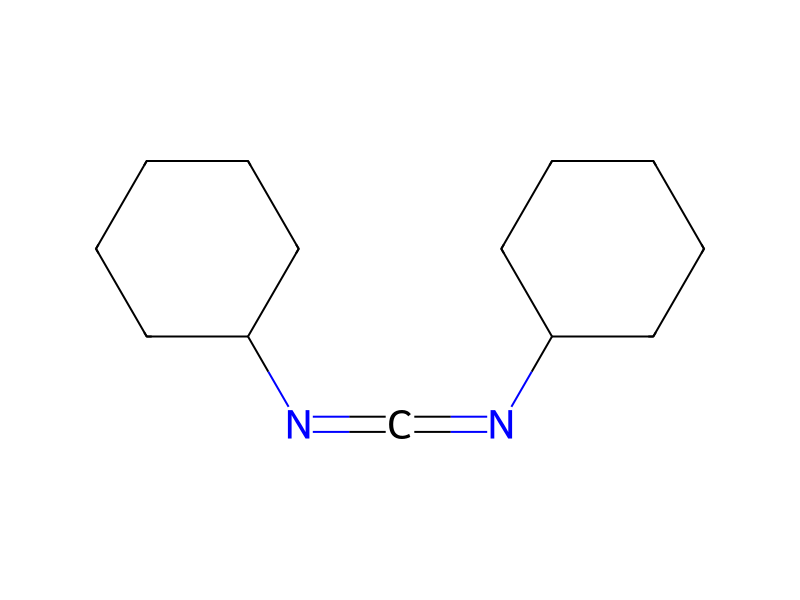
HCID 10868DicyclohexylcarbodiimideHCID 27960291-Hydroxybenzotriazole hydrateHCID 13986804(4R)-3-Benzoyl-1,1-dioxothiazolidine-4-carboxylic acidHCID 146963084-((1R)-1-Aminoethyl)phenol

Produkt 1

HCID 14696333(4R)-3-Benzoyl-4-[(R)-alpha-methyl-p-hydroxybenzylcarbamoyl]-1,1-dioxothiazolidineAusbeute 72 %

Reagenzien, Katalysatoren, Lösungsmittel 1

HCID 6228DimethylformamideLösungsmittel

Reaktionsbedingungen

Temperatur
5 °C

Versuchsvorschrift

1.00 g (7.29 mmole) of (R)-α-methyl-p-hydroxybenzylamine (prepared as described in Preparation 13), 1.12 g (7.29 mmole) of N-hydroxybenzotriazole monohydrate and 1.51 g (7.29 mmole) of dicyclohexylcarbodiimide were added in that order to a solution of 1.96 g (7.29 mmole) of (4R)-3-benzoyl-1,1-dioxothiazolidine-4-carboxylic acid (prepared as described in Preparation 12) in 100 ml of dimethylformamide cooled at 5° C., and then the mixture was stirred at a temperature between 3° and 6° C. for 30 minutes and then at room temperature for a further 23 hours. The reaction mixture was filtered, the insolubles were washed with 20 ml of ethyl acetate, and the filtrate and the washings were combined. 50 ml of ethyl acetate were added to the combined mixture, which was washed twice, each time with 50 ml of a 4% w/v aqueous solution of sodium bicarbonate, and the organic phase was separated and dried over anhydrous magnesium sulfate. The solvent was distilled off under reduced pressure and the residue was purified by Lobar column chromatography through silica gel (Merck, Art-10402), eluted with a 2:1 by volume mixture of ethyl acetate and cyclohexane. The eluate was concentrated by evaporation under reduced pressure and the residue was lyophilized with a mixture of acetone and benzene to give 2.04 g (72.0%) of the title compound in the form of a colorless powder.

Aufarbeitung

  1. waitat room temperature for a further 23 hours
  2. filtrationThe reaction mixture was filtered
  3. washthe insolubles were washed with 20 ml of ethyl acetate
  4. addition50 ml of ethyl acetate were added to the combined mixture, which
  5. washwas washed twice
  6. customeach time with 50 ml of a 4% w/v aqueous solution of sodium bicarbonate, and the organic phase was separated
  7. dry with materialdried over anhydrous magnesium sulfate
  8. distillationThe solvent was distilled off under reduced pressure
  9. customthe residue was purified by Lobar column chromatography through silica gel (Merck, Art-10402)
  10. washeluted with a 2:1 by volume mixture of ethyl acetate and cyclohexane
  11. concentrationThe eluate was concentrated by evaporation under reduced pressure
  12. additionthe residue was lyophilized with a mixture of acetone and benzene

Quellen und Nachweise

ORD-Eintrag
ord-f661de31117248c7b151a53ed8f37b13
Quelldatensatz
uspto-grants-1990_02
DOI
10.6084/m9.figshare.5104873.v1
Patentnummer
US04904680

Notizen zur Reaktion

Auf dieser SeiteKomponentenReaktionsbedingungenVersuchsvorschriftAufarbeitungQuellen und NachweiseNotizen zur Reaktion