Reaktionsgleichung
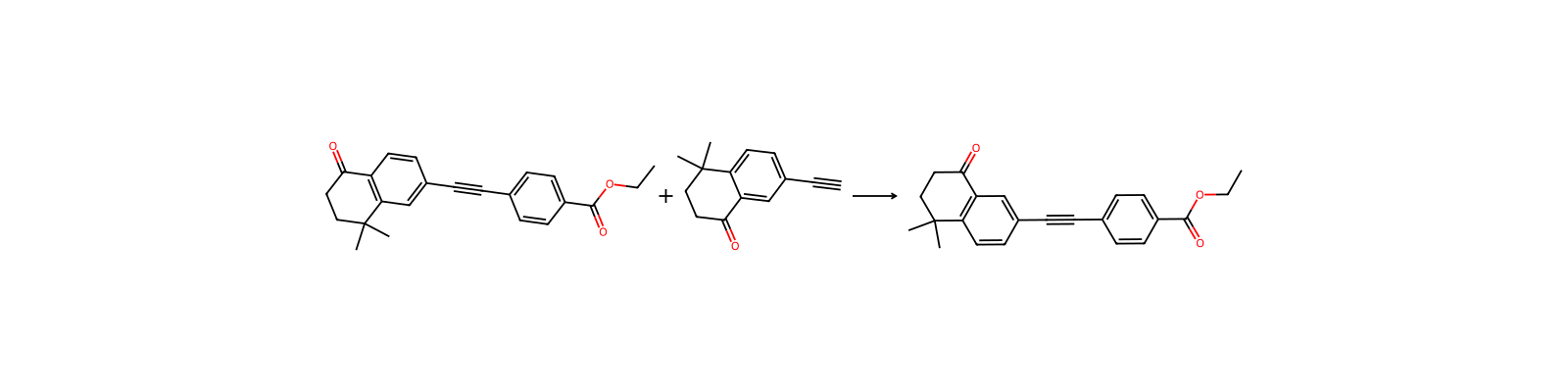
CC1(C)C2C=C(C#C[C:14]3[CH:24]=[CH:23][C:17]([C:18]([O:20][CH2:21][CH3:22])=[O:19])=[CH:16][CH:15]=3)C=CC=2C(=O)CC1.[C:27]([C:29]1[CH:38]=[C:37]2[C:32]([C:33]([CH3:41])([CH3:40])[CH2:34][CH2:35][C:36]2=[O:39])=[CH:31][CH:30]=1)#[CH:28]>>[CH3:40][C:33]1([CH3:41])[C:32]2[CH:31]=[CH:30][C:29]([C:27]#[C:28][C:14]3[CH:24]=[CH:23][C:17]([C:18]([O:20][CH2:21][CH3:22])=[O:19])=[CH:16][CH:15]=3)=[CH:38][C:37]=2[C:36](=[O:39])[CH2:35][CH2:34]1Komponenten
3

Versuchsvorschrift
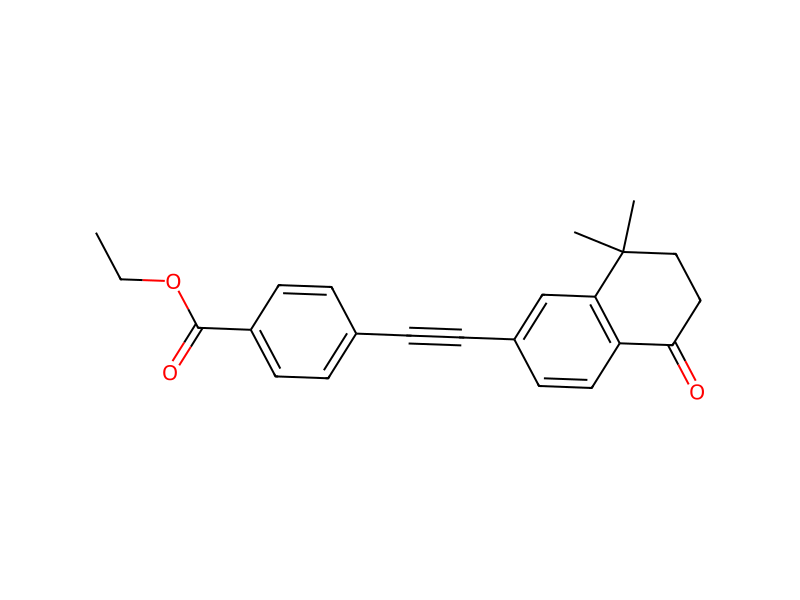
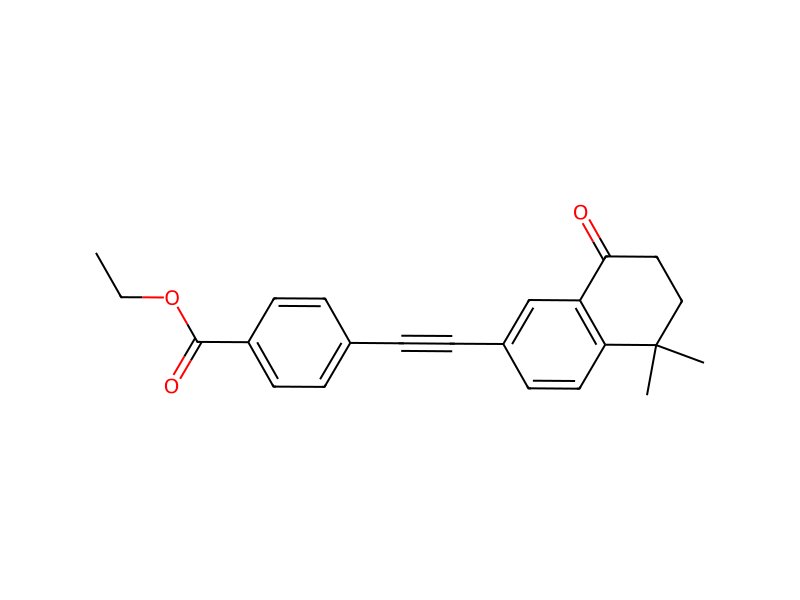
Employing the same general procedure as for the preparation of ethyl 4-[(5,6,7,8-tetrahydro-8,8-dimethyl-5-oxonaphth-2-yl)ethynyl]benzoate (Compound 1), 4 g (21.7 mmol) of 7-ethynyl-3,4-dihydro-4,4-dimethylnaphthalen-1(2H)-one (Compound L) was converted into the title compound using 6 g (21.7 mmol) of ethyl 4-iodobenzoate, 5 g (7.2 mmol) of bis(triphenylphosphine)palladium(II) chloride and 1.4 g (7.2 mmol) of cuprous iodide.
Quellen und Nachweise
- ORD-Eintrag
- ord-e299c501d96048db89b08fd31ee6b9bf
- Quelldatensatz
- uspto-grants-1998_03
- Patentnummer
- US05723620
Verknüpfte Notizen
Wird geladen…