StartseiteMCPWorkbenchSkills
StartseiteWorkbenchBenachrichtigungenMein Bereich
llms.txt · MCP-AnleitungDatenschutz · Nutzungsbedingungen · Supportv1.8.3
  1. Startseite
  2. /Reaktion

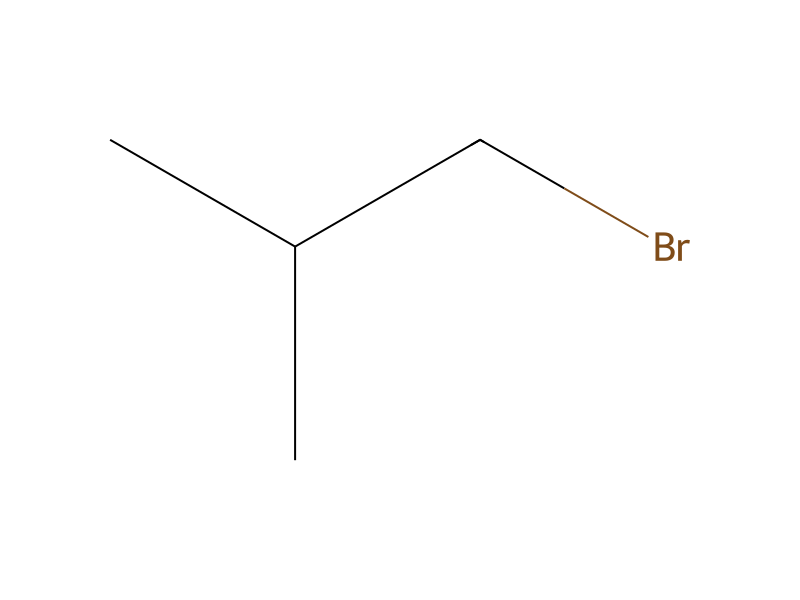
1-Bromo-2-methylpropane → 5-Bromo-2-isobutoxybenzaldehyde

HRID 1245835
Drucken

Reaktionsgleichung

Reaktionsgleichung von HRID 1245835
[Br:1][C:2]1[CH:3]=[CH:4][C:5]([OH:10])=[C:6]([CH:9]=1)[CH:7]=[O:8].C(=O)([O-])[O-].[K+].[K+].Br[CH2:18][CH:19]([CH3:21])[CH3:20]>CN(C)C=O>[Br:1][C:2]1[CH:3]=[CH:4][C:5]([O:10][CH2:18][CH:19]([CH3:21])[CH3:20])=[C:6]([CH:9]=1)[CH:7]=[O:8]
KomponentenReaktionsbedingungenVersuchsvorschriftAufarbeitungQuellen und NachweiseNotizen zur Reaktion

Komponenten

5

Edukt 3

HCID 65551-Bromo-2-methylpropaneHCID 11430Potassium CarbonateHCID 728635-Bromosalicylaldehyde

Produkt 1

HCID 9750405-Bromo-2-isobutoxybenzaldehyde

Reagenzien, Katalysatoren, Lösungsmittel 1

HCID 6228DimethylformamideLösungsmittel

Reaktionsbedingungen

Temperatur
70 °C

Versuchsvorschrift

To a solution of 5-bromo-2-hydroxybenzaldehyde (7.63 g) in dimethylformamide (40 ml) was added anhydrous potassium carbonate (15.7 g) followed by 1-bromo-2-methylpropane (6.2 ml). The resulting mixture was heated to 70° C. for 18 h. The mixture was partitioned between water and ethyl acetate. The organic layer was washed with 2N sodium hydroxide, dried (MgSO4) and evaporated to give an oil which was purified by column chromatography eluting with ethyl acetate/iso-hexane (10:90) to give 5-bromo-2-isobutoxybenzaldehyde (9.52 g) as an oil.

Aufarbeitung

  1. customThe mixture was partitioned between water and ethyl acetate
  2. washThe organic layer was washed with 2N sodium hydroxide
  3. dry with materialdried (MgSO4)
  4. customevaporated
  5. customto give an oil which
  6. customwas purified by column chromatography
  7. washeluting with ethyl acetate/iso-hexane (10:90)

Quellen und Nachweise

ORD-Eintrag
ord-b4d66dfcb5f745399dd1b0a9d9a8e87c
Quelldatensatz
uspto-grants-2006_10
DOI
10.6084/m9.figshare.5104873.v1
Patentnummer
US07125896B2

Notizen zur Reaktion

Auf dieser SeiteKomponentenReaktionsbedingungenVersuchsvorschriftAufarbeitungQuellen und NachweiseNotizen zur Reaktion