Triethylamine → 4-Amino-2-(3-methoxy-1-methylpropylamino)-5,6-dichloropyrimidine
Reaktionsgleichung

[CH3:1][O:2][CH2:3][CH2:4][CH:5]([NH2:7])[CH3:6].C(N(CC)CC)C.[NH2:15][C:16]1[C:21]([Cl:22])=[C:20]([Cl:23])[N:19]=[C:18](Cl)[N:17]=1>C1(C)C=CC=CC=1>[NH2:15][C:16]1[C:21]([Cl:22])=[C:20]([Cl:23])[N:19]=[C:18]([NH:7][CH:5]([CH3:6])[CH2:4][CH2:3][O:2][CH3:1])[N:17]=1Komponenten
5
Edukt 3


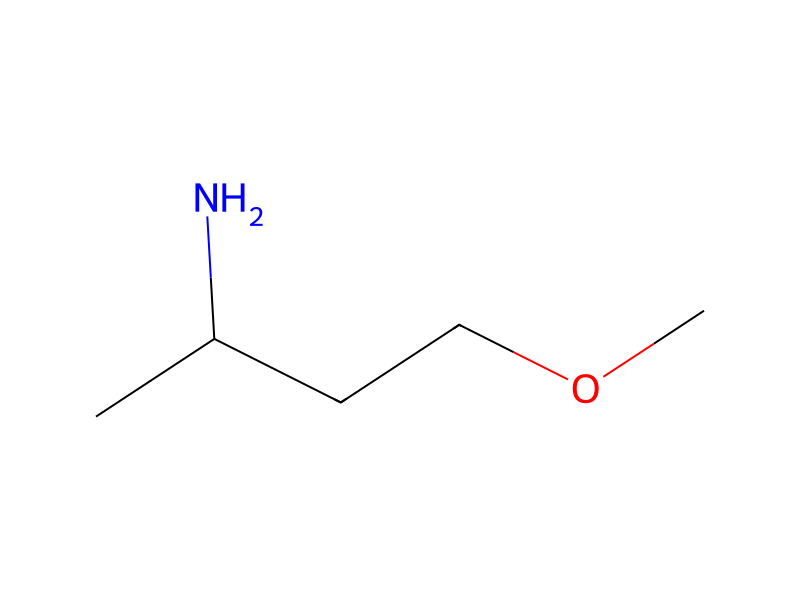
Produkt 1

Reagenzien, Katalysatoren, Lösungsmittel 1

Versuchsvorschrift
3.4 g (0.033 mole) of 3-methoxy-1-methylpropylamine and 3.3 g (0.033 mole) of triethylamine are successively added dropwise to a solution of 6.5 g (0.033 mole) of 4-amino-2,5,6-trichloropyrimidine in 200 ml of toluene and the mixture is heated to the boil for five hours. When it has cooled, the reaction mixture is washed with water and the organic phase is dried over sodium sulphate and concentrated. The crude product thus obtained is purified by chromatography over silica gel (length of column: 80 cm, diameter: 5 cm), using ethyl acetate and petroleum ether (1:1). In addition to 4-amino-6-(3-methoxy-1-methylpropylamino)-2,5-dichloropyrimidine (1st fraction, melting point 62° C.), 1.5 g (17.2% of theory) (2nd fraction, melting point 96° C.) of the desired pyrimidine are obtained.