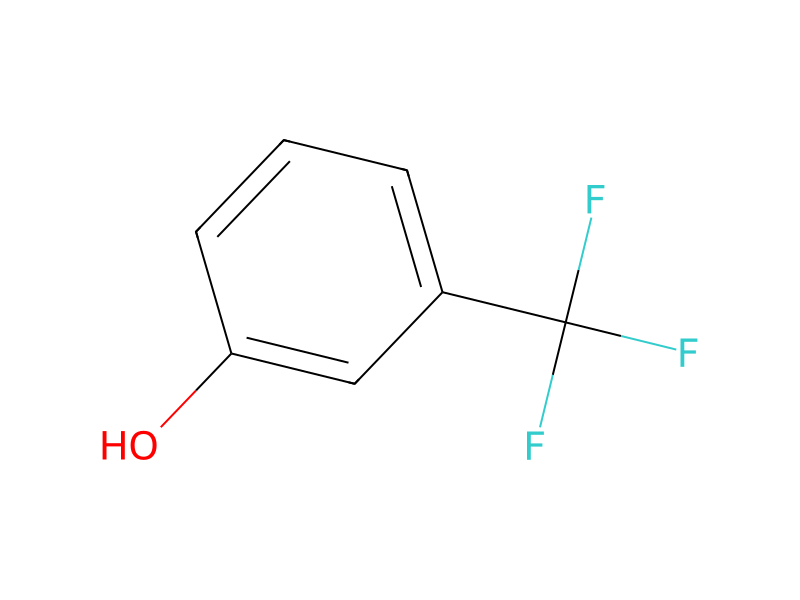
[F:1][C:2]([F:11])([F:10])[C:3]1[CH:4]=[C:5]([OH:9])[CH:6]=[CH:7][CH:8]=1.[H-].[Na+].Br[C:15]1[CH:20]=[C:19]([O:21][CH3:22])[CH:18]=[C:17](Br)[N:16]=1.[CH3:24][N:25](C)[CH:26]=[O:27]>CCCCCC>[C:24]1([NH:25][C:26]([C:15]2[CH:20]=[C:19]([O:21][CH3:22])[CH:18]=[C:17]([O:9][C:5]3[CH:6]=[CH:7][CH:8]=[C:3]([C:2]([F:10])([F:11])[F:1])[CH:4]=3)[N:16]=2)=[O:27])[CH:5]=[CH:4][CH:3]=[CH:8][CH:7]=13.34 g (0.187×1.1 mol) of 3-(trifluoromethyl) phenol was dissolved in about 30 ml of dimethyl formamide (hereinafter referred to merely as “DMF”). The solution was further mixed with 0.78 g (ca. 60% in mineral oil; 0.0187×1.04 mol) of NaH and then with 5.00 g (0.0187 mol) of 2,6-dibromo-4-methoxy pyridine. After stirring at about 120° C. for about 2 hours, the resultant mixture was allowed to stand for cooling to room temperature. After the reaction solution was distributed in hexane-saturated sodium bicarbonate water, the organic phase of the obtained solution was washed with saturated brine and dried with anhydrous sodium sulfate. The resultant solution was concentrated and then purified by silica gel column chromatography (eluting solution: ethyl acetate/hexane), and the obtained eluate was subjected to recrystallization using hexane, thereby obtaining an aimed product.
Wird geladen…