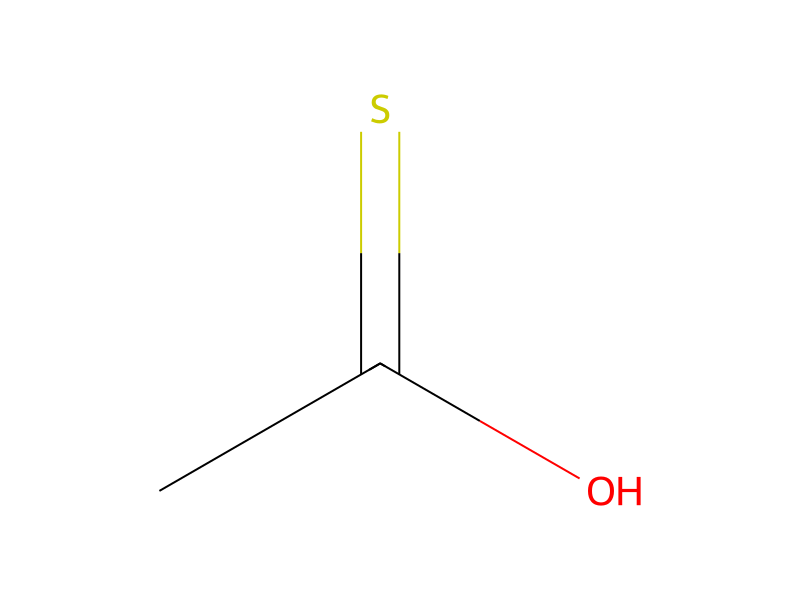
A solution of 3.36 g (40 mmoles) of thioacetic acid in 40 ml of N-potassium hydroxide is added dropwise to a solution of 2-bromomethyl-3-bromopropanoic acid in 1.0N potassium hydroxide (20 ml). The mixture is stirred at room temperature overnight, acidified with concentrated hydrochloric acid and extracted with ethyl acetate. The organic layer is dried and concentrated in vacuo. The residue is converted into a dicyclohexylammonium salt (m.p. 116°-118°) and the salt converted back into the free acid, 2-(acetylthiomethyl)-3-(acetylthio)propanoic acid, by distribution between ethyl acetate and 10% potassium bisulfate.