Benzenesulfonyl chloride → Ethyl {2-[(phenylsulfonyl)amino]-1,3-thiazol-4-yl}acetate
HRID 127107
Reaktionsgleichung

[NH2:1][C:2]1[S:3][CH:4]=[C:5]([CH2:7][C:8]([O:10][CH2:11][CH3:12])=[O:9])[N:6]=1.[C:13]1([S:19](Cl)(=[O:21])=[O:20])[CH:18]=[CH:17][CH:16]=[CH:15][CH:14]=1>N1C=CC=CC=1>[C:13]1([S:19]([NH:1][C:2]2[S:3][CH:4]=[C:5]([CH2:7][C:8]([O:10][CH2:11][CH3:12])=[O:9])[N:6]=2)(=[O:21])=[O:20])[CH:18]=[CH:17][CH:16]=[CH:15][CH:14]=1Komponenten
4
Edukt 2
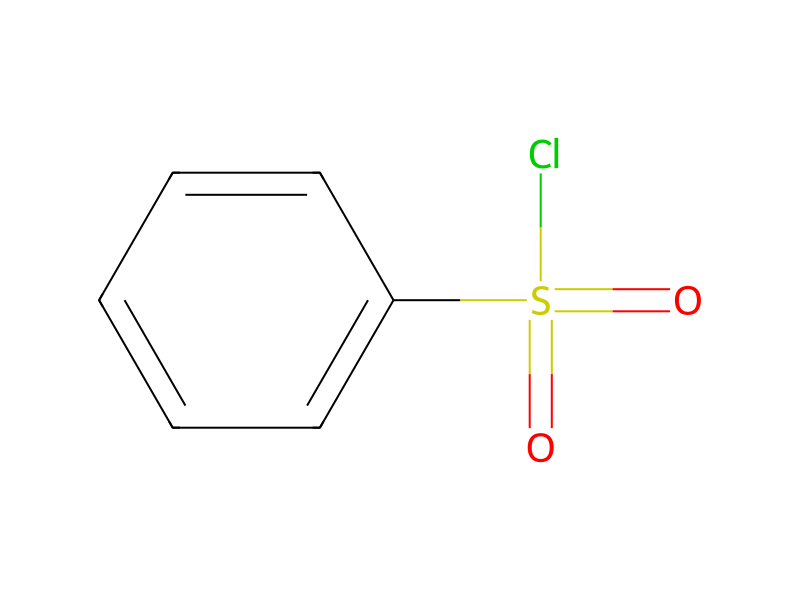

Produkt 1

Reagenzien, Katalysatoren, Lösungsmittel 1

Versuchsvorschrift
To a solution of ethyl 2-aminothiazol-4-ylacetate (18.6 g.) in pyridine (140 ml.) was added benzenesulfonyl chloride (17.7 g.), and the mixture was stirred for 50 minutes at 90° to 100° C., and then pyridine was distilled off under reduced pressure. To the residue was added 10% hydrochloric acid (200 ml.), and then extracted with ethyl acetate (100 ml.). The extract was washed with a saturated sodium chloride aqueous solution (50 ml.×2) and treated with an activated carbon and then dried. After distillation of ethyl acetate from the extract, the precipitated crystals were collected by filtration and washed with diethyl ether and dried to give ethyl 2-benzenesulfonamidothiazol-4-ylacetate (19.0 g.), mp 129° to 130° C.