StartseiteMCPWorkbenchSkills
StartseiteWorkbenchBenachrichtigungenMein Bereich
llms.txt · MCP-AnleitungDatenschutz · Nutzungsbedingungen · Supportv1.8.0
  1. Startseite
  2. /Reaktion

4-Hydroxybenzaldehyde → p-(Octyloxy)benzaldehyde

HRID 128778
Notizen
Druckvorschau

Reaktionsgleichung

Reaktionsgleichung von HRID 128778
[H-].[Na+].[OH:3][C:4]1[CH:11]=[CH:10][C:7]([CH:8]=[O:9])=[CH:6][CH:5]=1.Br[CH2:13][CH2:14][CH2:15][CH2:16][CH2:17][CH2:18][CH2:19][CH3:20]>CN(C)C=O>[CH2:13]([O:3][C:4]1[CH:11]=[CH:10][C:7]([CH:8]=[O:9])=[CH:6][CH:5]=1)[CH2:14][CH2:15][CH2:16][CH2:17][CH2:18][CH2:19][CH3:20]
KomponentenVersuchsvorschriftAufarbeitungQuellen und NachweiseNotizen zur Reaktion

Komponenten

5

Edukt 3

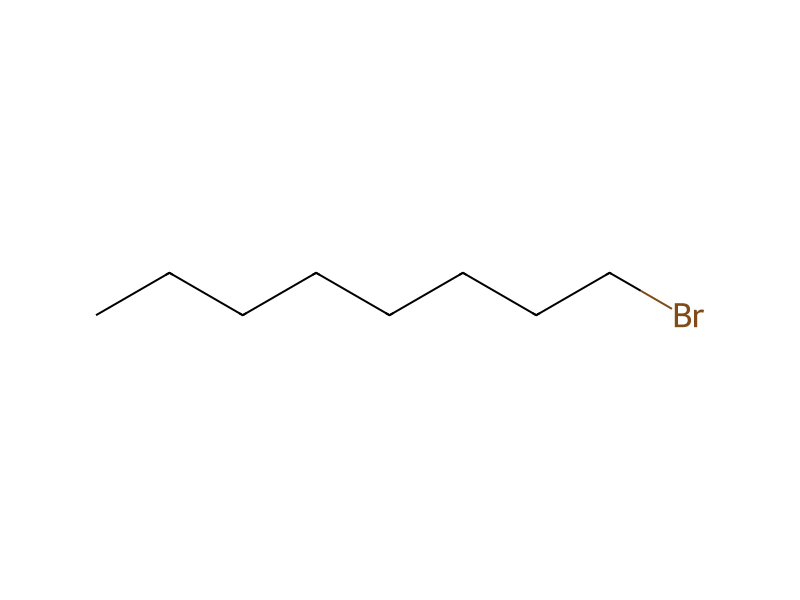
HCID 1264-HydroxybenzaldehydeHCID 81401-BromooctaneHCID 24758Sodium hydride

Produkt 1

HCID 90358p-(Octyloxy)benzaldehyde

Reagenzien, Katalysatoren, Lösungsmittel 1

HCID 6228DimethylformamideLösungsmittel

Versuchsvorschrift

Sodium hydride (4.2 g of 60% dispersion in oil) is added to a solution of 4-hydroxybenzaldehyde (12.2 g) in dimethylformamide. The mixture is stirred for 30 min, and 1-bromooctane (18 ml) is added. The reaction mixture is stirred at 90° for five hours, cooled, and the solvent removed in vacuo. The residue is shaken with water, and extracted with three portions of hexane. The hexane extracts are dried, concentrated, and distilled in vacuo to provide 20.3 g of 4-octyloxybenzaldehyde.

Aufarbeitung

  1. stirringThe reaction mixture is stirred at 90° for five hours
  2. temperaturecooled
  3. customthe solvent removed in vacuo
  4. stirringThe residue is shaken with water
  5. extractionextracted with three portions of hexane
  6. dry with materialThe hexane extracts are dried
  7. concentrationconcentrated
  8. distillationdistilled in vacuo

Quellen und Nachweise

ORD-Eintrag
ord-9d34e36668c044eab835a9a616aded82
Quelldatensatz
uspto-grants-1995_11
DOI
10.6084/m9.figshare.5104873.v1
Patentnummer
US05464865

Notizen zur Reaktion

Wird geladen…

Auf dieser SeiteKomponentenVersuchsvorschriftAufarbeitungQuellen und NachweiseNotizen zur Reaktion