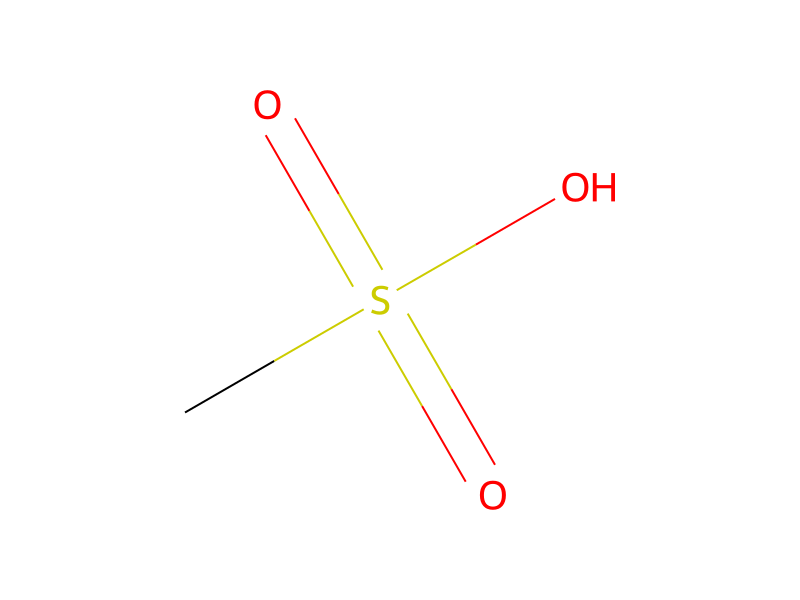
[CH3:1][O:2][CH:3]=[CH:4][C:5]1[CH:10]=[CH:9][C:8]([O:11][CH2:12][CH2:13][CH2:14][CH2:15][CH2:16][CH2:17][CH2:18][CH3:19])=[CH:7][CH:6]=1.CS(O)(=O)=O.[C:25](=O)(O)[O-:26].[Na+]>CO>[CH3:1][O:2][CH:3]([O:26][CH3:25])[CH2:4][C:5]1[CH:6]=[CH:7][C:8]([O:11][CH2:12][CH2:13][CH2:14][CH2:15][CH2:16][CH2:17][CH2:18][CH3:19])=[CH:9][CH:10]=1A solution of 1-(2-methoxyethenyl)-4-(octyloxy)benzene (3.67 g) and methanesulfonic acid (0.5 ml) in methanol (30 ml) is refluxed for 30 min, cooled, and neutralized with 1.0N aqueous sodium bicarbonate (10 ml). The mixture is evaporated in vacuo, and the residue dissolved in ether, dried with sodium sulfate, filtered, and evaporated to leave 1-(2,2-dimethoxyethyl)-4-(octyloxy)benzene as a colorless oil. This acetal may be used directly in step C below (as in example 2). Alternatively, the acetal is dissolved in a 1:1 mixture of THF and 3N hydrochloric acid, refluxed for one hour, and cooled. The mixture is extracted with dichloromethane, and without drying the dichloromethane extracts are concentrated to provide crude 4-(octyloxy)phenylacetaldehyde as an oil.