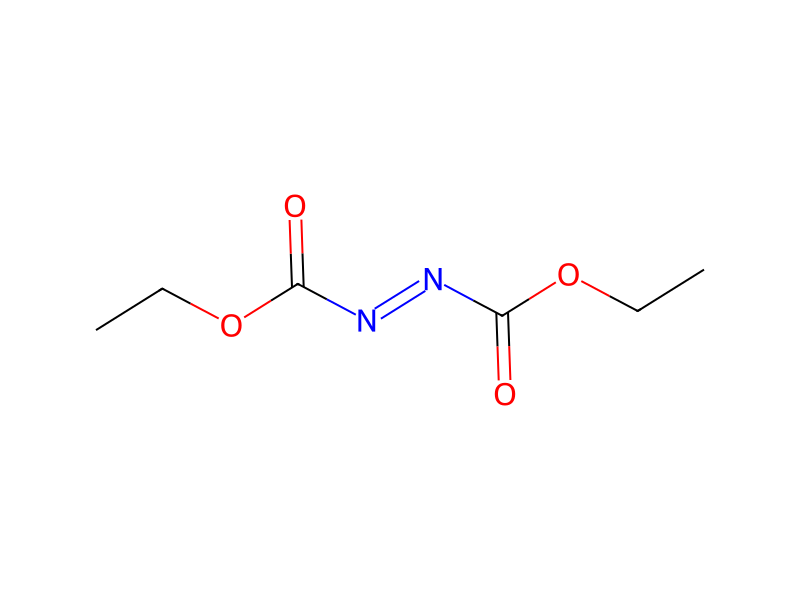
[CH3:1]/[C:2](=[CH:5]\[CH2:6][CH2:7][CH2:8][CH2:9][C:10]1[C:15]([CH3:17])([CH3:16])[CH2:14][CH2:13][CH2:12][C:11]=1[CH3:18])/[CH2:3][OH:4].[CH3:19][O:20][CH:21]([O:30][CH3:31])[CH2:22][C:23]1[CH:28]=[CH:27][C:26](O)=[CH:25][CH:24]=1.C1(P(C2C=CC=CC=2)C2C=CC=CC=2)C=CC=CC=1.N(C(OCC)=O)=NC(OCC)=O>C1COCC1>[CH3:31][O:30][CH:21]([O:20][CH3:19])[CH2:22][C:23]1[CH:24]=[CH:25][C:26]([O:4][CH2:3]/[C:2](/[CH3:1])=[CH:5]/[CH2:6][CH2:7][CH2:8][CH2:9][C:10]2[C:15]([CH3:17])([CH3:16])[CH2:14][CH2:13][CH2:12][C:11]=2[CH3:18])=[CH:27][CH:28]=1(2E)-2-Methyl-7-(2,6,6-trimethyl-1-cyclohexen-1-yl)-2-heptenol (1.5 g), 4-((2,2-dimethoxy)ethyl)phenol (1.1 g) and triphenylphosphine (1.59 g) are dissolved in THF (10 ml) and the solution cooled to 0°. Diethyl azodicarboxylate (1.05 ml, in 9 ml THF) is added dropwise with stirring, and the mixture is allowed to warm to room temperature and stirred overnight. The reaction mixture is concentrated and the residue is chromatographed with dichloromethane to provide 4-((2,2-dimethoxy)ethyl)-1-((2E)-2-methyl-7-(2,6,6-trimethyl- 1-cyclohexen-1-yl)-2-heptenyloxy)benzene as a pale yellow oil (2.27 g). This material is reacted with glyoxylic acid and morpholine hydrochloride by the method of Example 2 above, purified by chromatography with 7% ether in dichloromethane, and recrystallized from hexane-dichloromethane to provide the title compound as a white solid, mp 119°-121° (1.0 g).