Pyridine → N-(7-Chloro-3-propanamidoquinoxalin-2-yl)hexanamide
Reaktionsgleichung

[NH2:1][C:2]1[C:3]([NH:13][C:14](=[O:17])[CH2:15][CH3:16])=[N:4][C:5]2[C:10]([N:11]=1)=[CH:9][C:8]([Cl:12])=[CH:7][CH:6]=2.N1C=CC=CC=1.[C:24](Cl)(=[O:30])[CH2:25][CH2:26][CH2:27][CH2:28][CH3:29]>O1CCCC1>[Cl:12][C:8]1[CH:9]=[C:10]2[C:5](=[CH:6][CH:7]=1)[N:4]=[C:3]([NH:13][C:14](=[O:17])[CH2:15][CH3:16])[C:2]([NH:1][C:24](=[O:30])[CH2:25][CH2:26][CH2:27][CH2:28][CH3:29])=[N:11]2Komponenten
5
Edukt 3

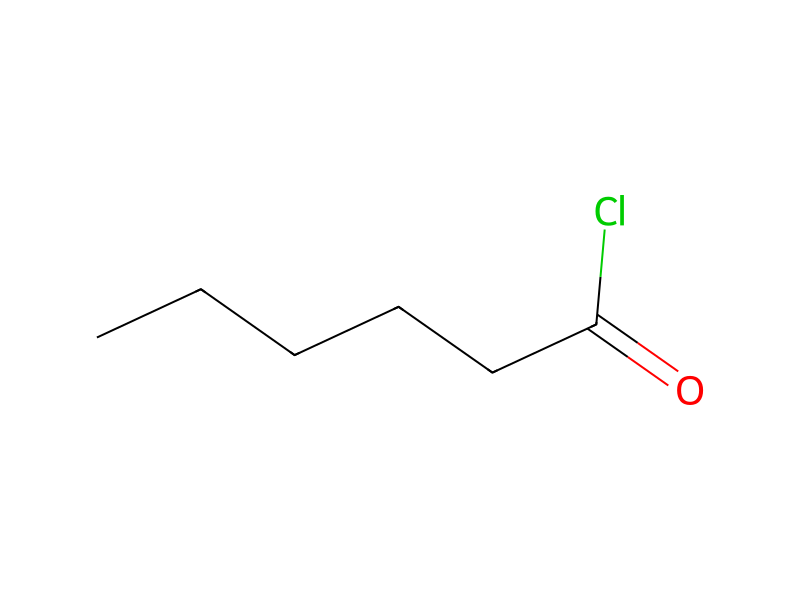

Produkt 1

Reagenzien, Katalysatoren, Lösungsmittel 1

Versuchsvorschrift
A suspension of 50 parts of 3-amino-6-chloro-2-propionamidoquinoxaline in 1000 parts of pyridine was cooled to 5° in an ice bath. A solution of 96 parts of hexanoyl chloride in 88 parts of tetrahydrofuran was added as quickly as possible with good cooling to prevent the temperature from rising above 25°. The reaction mixture was stirred for 10 minutes and then poured into 2500 parts of ice water. The yellow gum which separated was removed by filtration and washed with water and then dissolved in 2700 parts of methylene chloride. The methylene chloride solution was washed in succession with 1000 parts each of water, 5% aqueous hydrochloric acid, water, 10% aqueous sodium carbonate, and water. The methylene chloride solution was dried (MgSO4) and evaporated. The residue was recrystallized from 1:4 ethyl acetate-benzene, the solid filtered off, and washed with ether to yield 8 parts of 6-chloro-3-hexanamido-2-propionamidoquinoxaline, m.p. 158°-160°, as a colorless solid.