Nitrous Acid → 7-Chloro-8-fluoroisoquinoline
HRID 1288464
Reaktionsgleichung

N[C:2]1[C:3]([Cl:12])=[CH:4][CH:5]=[C:6]2[C:11]=1[CH:10]=[N:9][CH:8]=[CH:7]2.N([O-])=O.[Na+].N(O)=O.[H+].[B-](F)(F)(F)[F:22]>>[Cl:12][C:3]1[C:2]([F:22])=[C:11]2[C:6]([CH:7]=[CH:8][N:9]=[CH:10]2)=[CH:5][CH:4]=1Komponenten
5

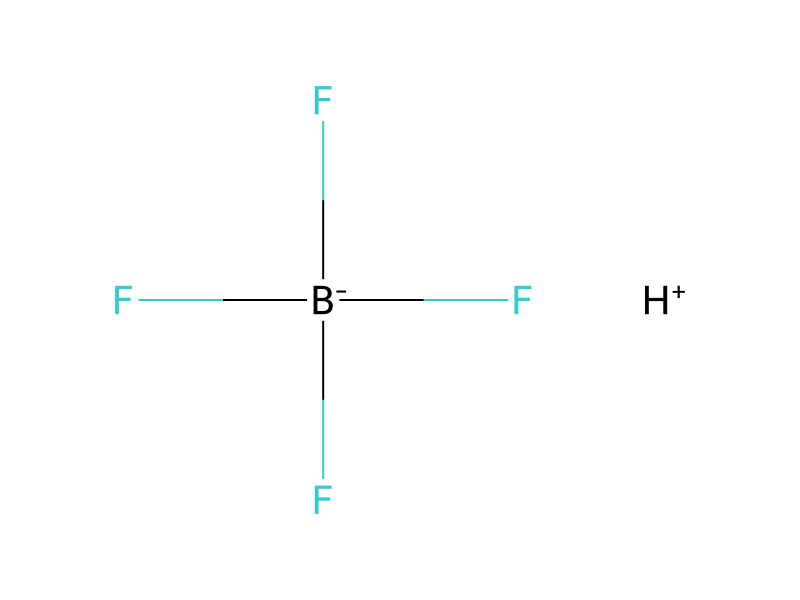



Versuchsvorschrift
8-Amino-7-chloroisoquinoline (0.005 mole), prepared as in Example 12, in 40% fluoboric acid (30 ml.) is cooled to -10° C. and diazotized with finely powdered sodium nitrite (3.5 g.). After 30 minutes, the reaction mixture is tested for nitrous acid with starch/iodide paper as described in Example 15. When a positive reaction is obtained, the reaction mixture is washed with small portions of ether and then agitated with a mixture of ethanol and ether (20 ml. each). The diazonium tetrafluoroborate is filtered, washed with ether, dried in vacuo and decomposed on an oil bath at approximately 150° C. The residue is partitioned between ether and 5% aqueous sodium hydroxide solution. The ether phase and extracts are combined, washed with water, dried over sodium sulfate and evaporated to yield 7-chloro-8-fluoroisoquinoline.