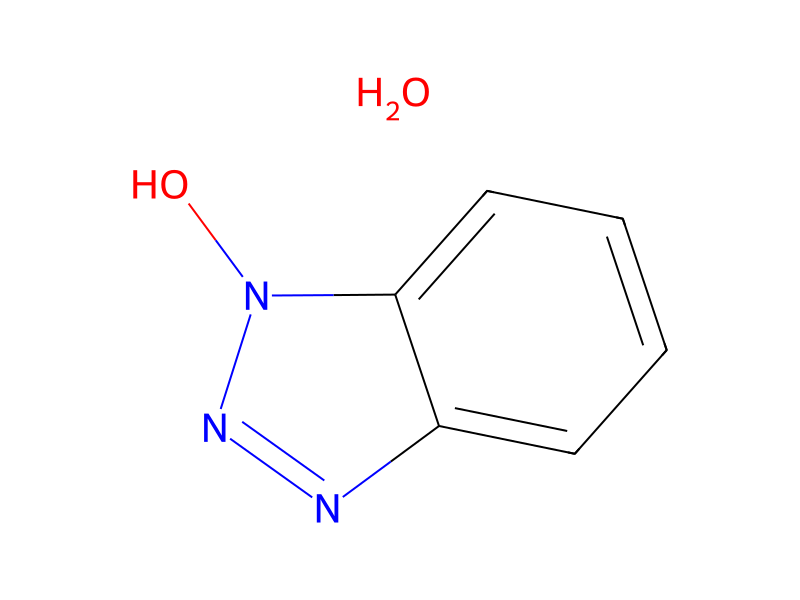
[CH2:1]([O:8][C:9]1[CH:10]=[C:11]2[C:15](=[CH:16][CH:17]=1)[NH:14][CH:13]=[C:12]2[CH2:18][CH2:19][C:20](O)=O)[C:2]1[CH:7]=[CH:6][CH:5]=[CH:4][CH:3]=1.O.ON1C2C=CC=CC=2N=N1.C(N=C=NC(C)C)(C)C.Cl.[O:44]1[C:49]2[CH:50]=[CH:51][CH:52]=[CH:53][C:48]=2[O:47][CH2:46][CH:45]1[CH2:54][NH2:55]>CN(C=O)C>[CH2:1]([O:8][C:9]1[CH:10]=[C:11]2[C:15](=[CH:16][CH:17]=1)[NH:14][CH:13]=[C:12]2[CH2:18][CH2:19][CH2:20][NH:55][CH2:54][CH:45]1[O:44][C:49]2[CH:50]=[CH:51][CH:52]=[CH:53][C:48]=2[O:47][CH2:46]1)[C:2]1[CH:3]=[CH:4][CH:5]=[CH:6][CH:7]=15-Benzyloxyindole-3-propionic acid (2.7 g, 9.1 mmole), 1-hydroxybenzotriazole hydrate (1.5 g, 10.9 mmole) and 1,3-diisopropylcarbodiimide (3.4 ml, 21.8 mmole) were combined in 200 ml of DMF and stirred at room temperature for 2 hours under a nitrogen atmosphere. To this was added dropwise 2,3-dihydro-1,4-benzodioxin-2-methanamine hydrochloride (1.8 g, 9.1 mmole) in 50 ml of DMF and the mixture was further stirred for 24 hours. The solvent was removed and replaced with dichloromethane. The mixture was then washed with H2O. The separated organic layer was dried over anhydrous sodium sulfate, filtered and concentrated in vacuum. The residue was chromatographed on silica gel using first dichloromethane and then 2.5% methanol in dichloromethane as eluants to give 3.2 g (79%) of the desired product, (2,3-dihydro-benzo[1,4]dioxin-2-ylmethyl)-3-(5-benzyloxy-1H-indol-3-yl)-propanamide, as a light tan solid.
Wird geladen…