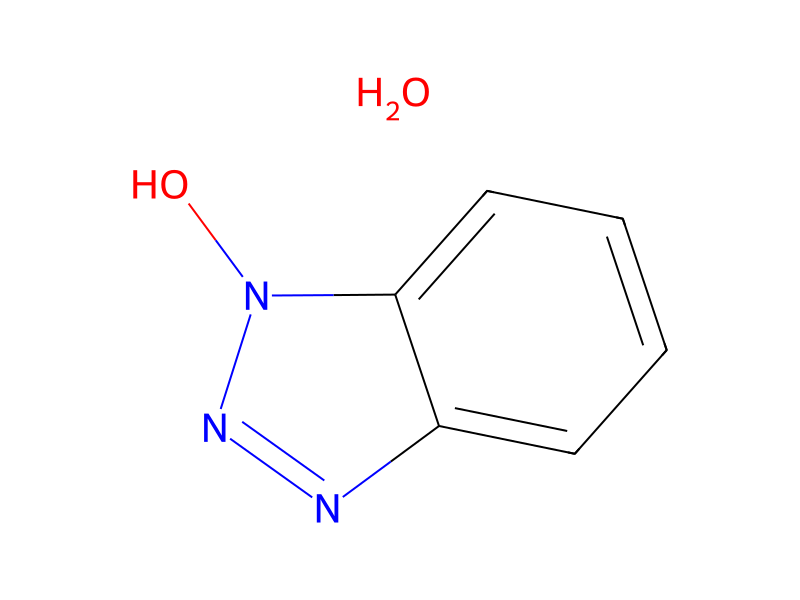
[CH3:1][O:2][C:3]1[CH:4]=[C:5]2[C:9](=[CH:10][CH:11]=1)[NH:8][CH:7]=[C:6]2[CH2:12][CH2:13][CH2:14][C:15](O)=O.O.ON1C2C=CC=CC=2N=N1.C(N=C=NC(C)C)(C)C.Cl.[O:39]1[C:44]2[CH:45]=[CH:46][CH:47]=[CH:48][C:43]=2[O:42][CH2:41][CH:40]1[CH2:49][NH2:50]>CN(C=O)C>[O:39]1[C:44]2[CH:45]=[CH:46][CH:47]=[CH:48][C:43]=2[O:42][CH2:41][CH:40]1[CH2:49][NH:50][CH2:15][CH2:14][CH2:13][CH2:12][C:6]1[C:5]2[C:9](=[CH:10][CH:11]=[C:3]([O:2][CH3:1])[CH:4]=2)[NH:8][CH:7]=15-methoxyindole-3-butyric acid (1.5 g, 6.4 mmole), 1-hydroxybenzotriazole hydrate (1.0 g, 7.7 mmole) and 1,3-diisopropylcarbodiimide (2.4 ml, 15.4 mmole) were combined in 150 ml of DMF and stirred at room temperature for 2 hours under a nitrogen atmosphere. To this was added dropwise 2,3-dihydro-1,4-benzodioxin-2-methanamine hydrochloride (1.3 g, 6.4 mmole) in 50 ml of DMF and the mixture was further stirred for 24 hours. The solvent was removed and the residue partitioned between dichloromethane and water. The separated dichloromethane layer was dried over anhydrous sodium sulfate, filtered and concentrated in vacuum. The residue was chromatographed on a silica gel column using ethyl acetate as the eluant. Fractions containing product were concentrated and washed with a minimum amount of TBF to remove a by-product and to give 1.8 g (74%) of the desired product, (2,3-dihydrobenzo[1,4]dioxin-2-ylmethyl)-4-(5-1H-indole-3-yl)-butanamide, as an oil.
Wird geladen…