Benzyl Alcohol → Benzyl alpha-D-glucopyranoside
HRID 129109
Reaktionsgleichung

C(Cl)(=O)C.[CH2:5]([OH:12])[C:6]1[CH:11]=[CH:10][CH:9]=[CH:8][CH:7]=1.[O:13]=[CH:14][C@@H:15]([C@H:17]([C@@H:19]([C@@H:21]([CH2:23][OH:24])[OH:22])[OH:20])[OH:18])O>>[CH:9]1[CH:10]=[CH:11][C:6]([CH2:5][O:12][C@H:23]2[O:24][C@H:15]([CH2:14][OH:13])[C@@H:17]([OH:18])[C@H:19]([OH:20])[C@H:21]2[OH:22])=[CH:7][CH:8]=1Komponenten
4


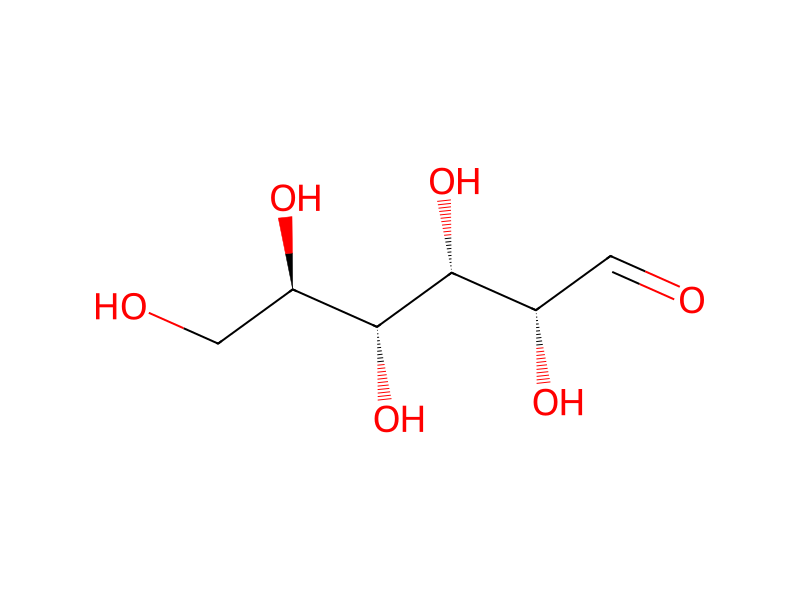

Reaktionsbedingungen
- Temperatur
- 80 °C
Versuchsvorschrift
Acetyl chloride, 80 mL, was added carefully to 1.75 L benzyl alcohol. This was followed by the addition of 180 g glucose. The mixture was heated, with stirring, at 80° C. overnight; then cooled, and poured into a plastic bucket. The product was precipitated as an oil by the addition of ether (3 L) and hexane (15 L). The supernatant liquid was decanted, and the residual oil washed with ether-hexane 1:1 (10 L), then ether. This afforded benzyl-alpha-D-glucopyranoside as a semisolid which was filtered, crushed, and washed with ether, then hexane to afford 237.3 g (0.88 mole; 88%) white solid.