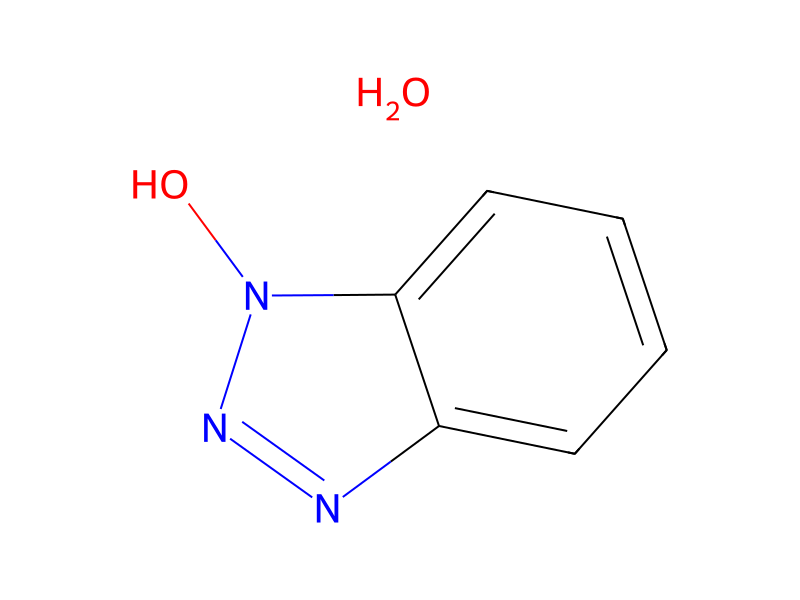
[Cl:1][C:2]1[N:10]=[CH:9][C:8]([Cl:11])=[CH:7][C:3]=1[C:4]([OH:6])=O.[NH2:12][C@H:13]([C:15]1[CH:27]=[CH:26][C:18]([C:19]([O:21][C:22]([CH3:25])([CH3:24])[CH3:23])=[O:20])=[CH:17][CH:16]=1)[CH3:14].Cl.CN(C)CCCN=C=NCC.O.ON1C2C=CC=CC=2N=N1>ClCCl.C(N(CC)CC)C>[Cl:1][C:2]1[C:3]([C:4]([NH:12][C@H:13]([C:15]2[CH:27]=[CH:26][C:18]([C:19]([O:21][C:22]([CH3:24])([CH3:23])[CH3:25])=[O:20])=[CH:17][CH:16]=2)[CH3:14])=[O:6])=[CH:7][C:8]([Cl:11])=[CH:9][N:10]=1To a stirred solution of 2,5-dichloronicotinic acid (Syn. Commun. 1989, 19, 553–9, 1.92 g, 10 mmol) and tert-butyl 4-[(1S)-1-aminoethyl]benzoate (example 44 step 3, 2.02 g, 9.1 mmol) in dichloromethane (20 mL) were successively added 1-(3-dimethylaminopropyl)-3-ethylcarbodiimide hydrochloride (EDCI) (2.59 g, 13.5 mmol), 1-hydroxybenzotriazole hydrate (HOBT) (2.07 g, 13.5 mmol), and triethylamine (4 mL). After being stirred overnight, the reaction was quenched by the addition of saturated sodium bicarbonate aqueous solution (100 mL). The aqueous layer was extracted with dichloromethane (50 mL×3) and the combined organic layers were washed with brine (100 mL), dried (sodium sulfate), and evaporated. The remaining residue was purified by flush column chromatography on silica gel (100 g) eluting with dichloromethane/ethyl acetate (20/1) to afford 2.51 g (70%) of the title compounds as white solids: 1H-NMR (CDCl3) δ 8.41 (1H, d, J=2.6 Hz), 8.09 (1H, d, J=2.6 Hz), 7.99 (2H, d, J=8.3 Hz), 7.43 (2H, d, J=8.3 Hz), 6.81 (1H, d, J=7.2 Hz), 5.33 (1H, dq, J=7.2, 7.0 Hz), 1.62 (3H, d, J=7.0 Hz), 1.58 (9H, s).