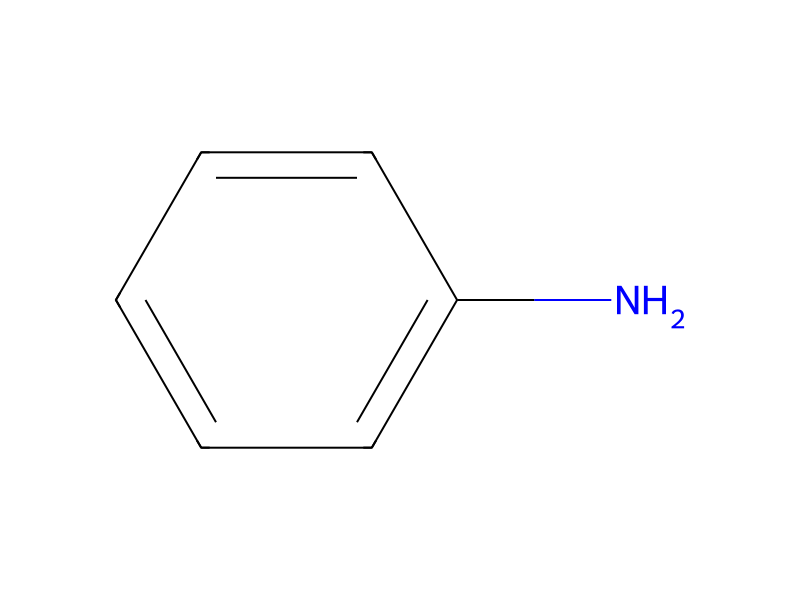
[CH3:1][O:2][C:3]1[C:4]([N+:16]([O-:18])=[O:17])=[C:5]2[C:10](=[CH:11][C:12]=1[O:13][CH3:14])[N:9]=[CH:8][NH:7][C:6]2=O.[NH2:19][C:20]1[CH:25]=[CH:24][CH:23]=[CH:22][CH:21]=1>O=S(Cl)Cl.CN(C=O)C>[CH3:1][O:2][C:3]1[C:4]([N+:16]([O-:18])=[O:17])=[C:5]2[C:10](=[CH:11][C:12]=1[O:13][CH3:14])[N:9]=[CH:8][N:7]=[C:6]2[NH:19][C:20]1[CH:25]=[CH:24][CH:23]=[CH:22][CH:21]=1To a solution of 6,7-dimethoxy-5-nitro-3H-quinazolin-4-one (1.0 g, 3.98 mmol) (from Example 1, Step A, supra) in SOCl2 (20 mL) (Aldrich) were added a few drops of DMF. The reaction mixture was then heated with stirring at 90° C. for 3 hours. The solvents were evaporated and the residue was dried in vacuo. The residue was dissolved in 2-propanol (30 mL), then aniline (0.36 mL, 3.98 mmol) (Aldrich) was added. The reaction mixture was heated at 110° C. for 3 hours. The reaction mixture was concentrated under reduced pressure and the residue was purified by chromatography using EtOAc/CH2Cl2/NEt3 (1:1:0.05) as eluent to give the desired (6,7-dimethoxy-5-nitro-quinazolin-4-yl)-phenyl-amine as a yellow solid. (Yield 0.9 g, 70%).