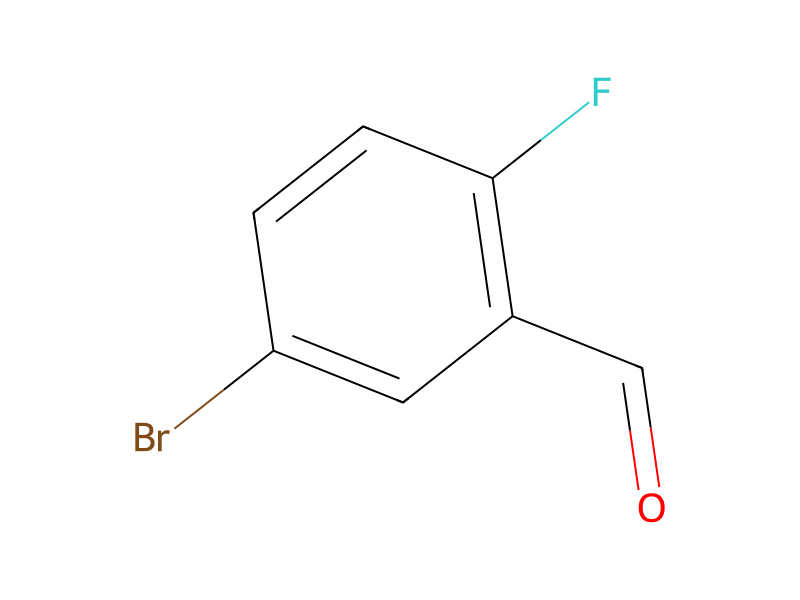
Under N2 in a 1 L round-bottomed flask fitted with a reflux condenser and magnetic stirrer were placed 51.1 g (370 mmol) of K2CO3 and 20.1 g (123 mmol) of 3,4-dichlorophenol (Aldrich Chem. Co., Milwaukee, Wis.) in 500 mL of anhydrous N,N-dimethylformamide (DMF). After stirring the mixture for 30 min., 25 g (123 mmol) of 5-bromo-2-fluoro-benzaldehyde (Aldrich) in 150 mL of DMF was added and the mixture was heated to 90-100° C. overnight. After allowing the reaction to cool to room temperature, the mixture was concentrated at reduced pressure on a rotary evaporator and the resulting oily residue was then diluted with water and EtOAc. The aqueous layer was then extracted with additional EtOAc and the organic layers were combined, washed with H2O and saturated NaCl and dried over Na2SO4. Removal of the solvent in vacuo gave a light yellow oil which was further dried under vacuum overnight to give the title product as a pale yellow solid, 40.2 g; m.p. 129-132° C.