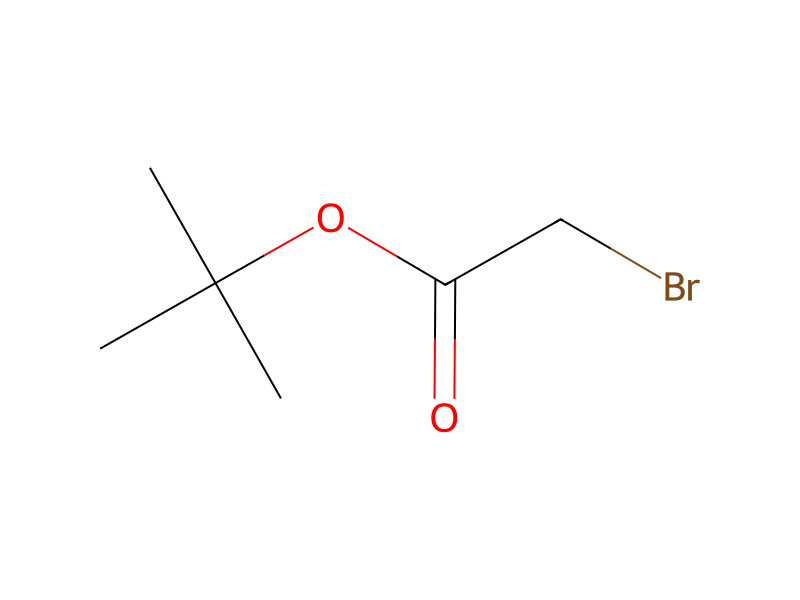
[OH:1][C:2]1[CH:7]=[CH:6][C:5]([C:8]([CH3:14])([OH:13])[C:9]([O:11][CH3:12])=[O:10])=[CH:4][CH:3]=1.Br[CH2:16][C:17]([O:19][C:20]([CH3:23])([CH3:22])[CH3:21])=[O:18].C(=O)([O-])[O-].[K+].[K+]>CN(C)C=O>[C:20]([O:19][C:17]([CH2:16][O:1][C:2]1[CH:3]=[CH:4][C:5]([C:8]([CH3:14])([OH:13])[C:9]([O:11][CH3:12])=[O:10])=[CH:6][CH:7]=1)=[O:18])([CH3:23])([CH3:22])[CH3:21]A mixture of methyl 4-hydroxyphenyllactate (18.5 g), t-butyl bromoacetate (14 ml), anhydrous potassium carbonate (26.0 g) and anhydrous dimethylformamide (300 ml) was stirred at 60° C. for 10 hours and then allowed to stand at room temperature overnight The reaction mixture was partitioned between ethyl acetate and water. The extract was washed with saturated aqueous sodium chloride solution, dried over anhydrous sodium sulfate and concentrated under reduced pressure. The residue was chromatographed on a silica gel column using hexane:ethyl acetate=2:1-1:1 as the eluant to afford the title compound (17.5 g, Rf=0.62: thin layer chromatography on a silica gel plate using hexane:ethyl acetate=1:1 as the eluant).