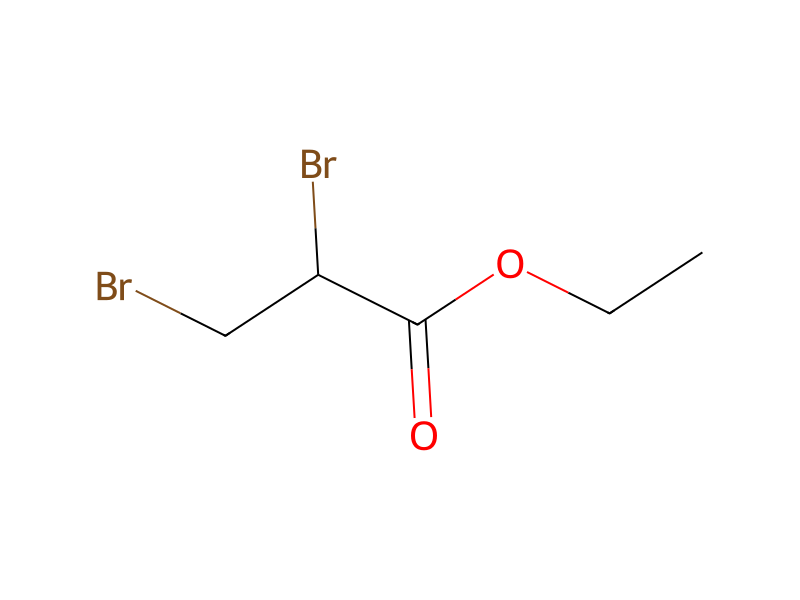
[NH2:1][C:2]1[CH:7]=[C:6]([Br:8])[CH:5]=[CH:4][C:3]=1[OH:9].Br[CH:11]([CH2:17]Br)[C:12]([O:14][CH2:15][CH3:16])=[O:13].C(=O)([O-])[O-].[K+].[K+]>CC(C)=O>[CH2:15]([O:14][C:12]([CH:11]1[CH2:17][NH:1][C:2]2[CH:7]=[C:6]([Br:8])[CH:5]=[CH:4][C:3]=2[O:9]1)=[O:13])[CH3:16]A mixture of 2-amino-4-bromophenol (5.00 g, 26.6 mmol), ethyl 2,3-dibromopropionate (7.84 g, 29.2 mmol), and potassium carbonate (10.3 g, 81.8 mmol) in acetone (55 mL) was heated at reflux for 16 h. After evaporation of volatile material, the residue was partitioned between dichloromethane and water. The organic layer was washed with 1 M aq. sodium carbonate solution and brine, dried (MgSO4), and evaporated. Chromatography (SiO2, heptane-ethyl acetate gradient produced 6-bromo-3,4-dihydro-2H-benzo[1,4]oxazine-2-carboxylic acid ethyl ester (5.95 g, 78%). Orange solid, MS (ISP)=286.0 (M+H)+.