4-Chlorophenyl Isocyanate → 1-(4-chloro-phenyl)-3-(4-oxo-4H-chromen-6-yl)-urea
HRID 1362941
Reaktionsgleichung

[NH2:1][C:2]1[CH:3]=[C:4]2[C:9](=[CH:10][CH:11]=1)[O:8][CH:7]=[CH:6][C:5]2=[O:12].[Cl:13][C:14]1[CH:19]=[CH:18][C:17]([N:20]=[C:21]=[O:22])=[CH:16][CH:15]=1>C1(C)C=CC=CC=1>[Cl:13][C:14]1[CH:19]=[CH:18][C:17]([NH:20][C:21]([NH:1][C:2]2[CH:3]=[C:4]3[C:9](=[CH:10][CH:11]=2)[O:8][CH:7]=[CH:6][C:5]3=[O:12])=[O:22])=[CH:16][CH:15]=1Komponenten
4
Edukt 2
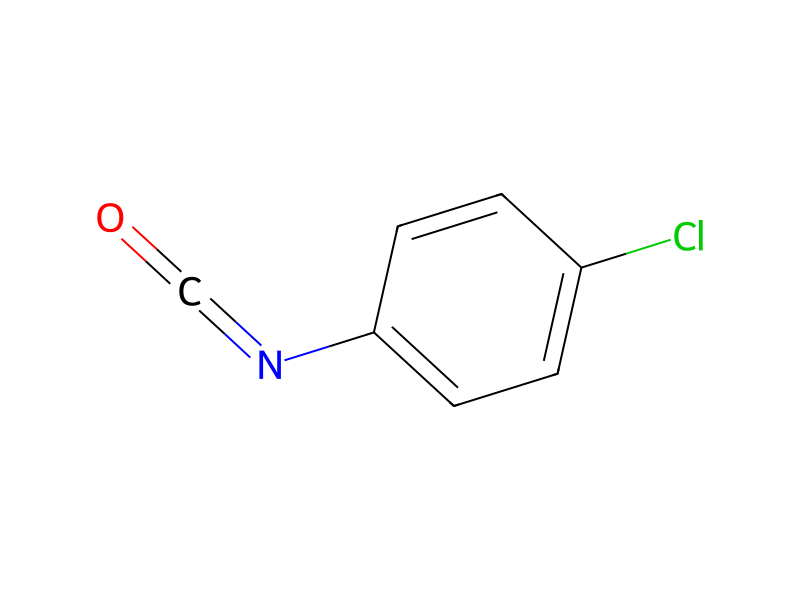

Produkt 1

Reagenzien, Katalysatoren, Lösungsmittel 1

Versuchsvorschrift
To a stirred and heated (80° C.) slurry of 6-aminochromone (3.0 g, 18.6 mmol) in toluene (200 mL) was added 4-chlorophenyl isocyanate (3.2 g, 20.5 mmol) and the mixture was refluxed further for 18 hours. The reaction mixture was cooled and the precipitate was filtered and washed with methanol. The residue was dried in vacuo to afford 1-(4-chloro-phenyl)-3-(4-oxo-4H-chromen-6-yl)-urea (5.8 g, 99%) as a yellow powder. LCMS m/z (%)=315 (M+H 35Cl, 100), 317 (M+H 37Cl, 32.2) 1H NMR (400 MHz, DMSO-d6) δ: 9:09 (bs, 1H), 8.94 (bs, 1H), 8.29 (d, J=5.99 Hz, 1H), 8.20 (d, J=2.69 Hz, 1H), 7.81 (dd, J=9.0, 2.75 Hz, 1H), 7.62 (d, J=9.07 Hz, 1H), 7.52 (dd, J=6.84, 2.16 Hz, 2H), 7.35 (dd, J=6.85, 2.11 Hz, 2H), 6.33 (d, J=5.98 Hz, 1H).