Reaktionsgleichung

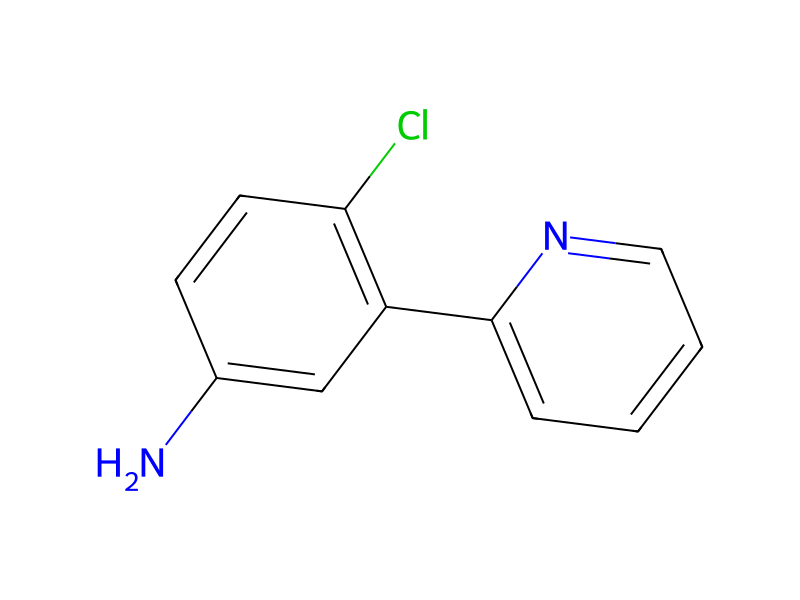
[Cl:1][C:2]1[CH:8]=[CH:7][C:5]([NH2:6])=[CH:4][C:3]=1[C:9]1[CH:14]=[CH:13][CH:12]=[CH:11][N:10]=1.[F:15][C:16]1[CH:21]=[CH:20][C:19]([N:22]2[C:26]([CH3:27])=[C:25]([C:28](O)=[O:29])[CH:24]=[N:23]2)=[CH:18][CH:17]=1>>[Cl:1][C:2]1[CH:8]=[CH:7][C:5]([NH:6][C:28]([C:25]2[CH:24]=[N:23][N:22]([C:19]3[CH:20]=[CH:21][C:16]([F:15])=[CH:17][CH:18]=3)[C:26]=2[CH3:27])=[O:29])=[CH:4][C:3]=1[C:9]1[CH:14]=[CH:13][CH:12]=[CH:11][N:10]=1Komponenten
3


Versuchsvorschrift
50 mg of 4-chloro-3-(pyridin-2-yl)aniline was coupled to 1-(4-fluorophenyl)-5-methyl-1H-pyrazole-4-carboxylic acid via Procedure G. The product was purified on reverse phase HPLC to yield N-(4-chloro-3-(pyridin-2-yl)phenyl)-1-(4-fluorophenyl)-5-methyl-1H-pyrazole-4-carboxamide. MS (Q1) 407.0 (M)+.
Aufarbeitung
- customThe product was purified on reverse phase HPLC
Quellen und Nachweise
- ORD-Eintrag
- ord-4c66ae3ae7724df6b6e2027d798ba4c7
- Quelldatensatz
- uspto-grants-2011_02
- Patentnummer
- US07888364B2
Verknüpfte Notizen
Wird geladen…