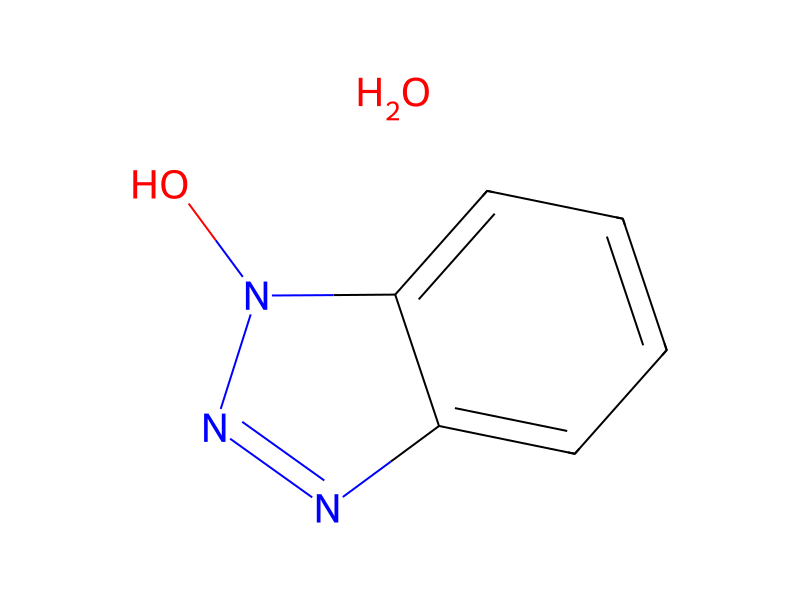
To a stirring solution of 4-bromobenzylamine hydrochloride (97.8 mg, 98%, 0.431 mmol) in anhydrous DMF (5 ml) was added triethylamine (60.1 ul. 0.431 mmol), After 5 min, 2-[1,6]naphthyridinecarboxylic acid (50 mg, 0.287 mmol), 1-hydroxybenzotriazole hydrate (42.7 mg, 0.316 mmol) and 1-(3-dimethylaminopropyl)-3-ethylcarbodiimide hydrochloride (60.6 mg, 0.316 mmol) was sequentially added. The resulting mixture was allowed to stir at room temperature for overnight and it was found to be clear. The solvent was removed under vacuum and the resulting residue was redissolved in CH2Cl2 (100 ml). The resulting mixture was allowed to stir at room temperature overnight and it was found to be clear. The solvent was removed under vacuum and the resulting residue was redissolved in CH2Cl2 (100 ml). The organic layer was washed with aqueous NaHCO3, dried over anhydrous MgSO4, and concentrated to give the crude mixture. Chromatography of the crude (Hex:EtOAc=1:1 to pure EtOAc) afforded desired product as white solid (97 mg, 99%): m.p. 149-150° C.