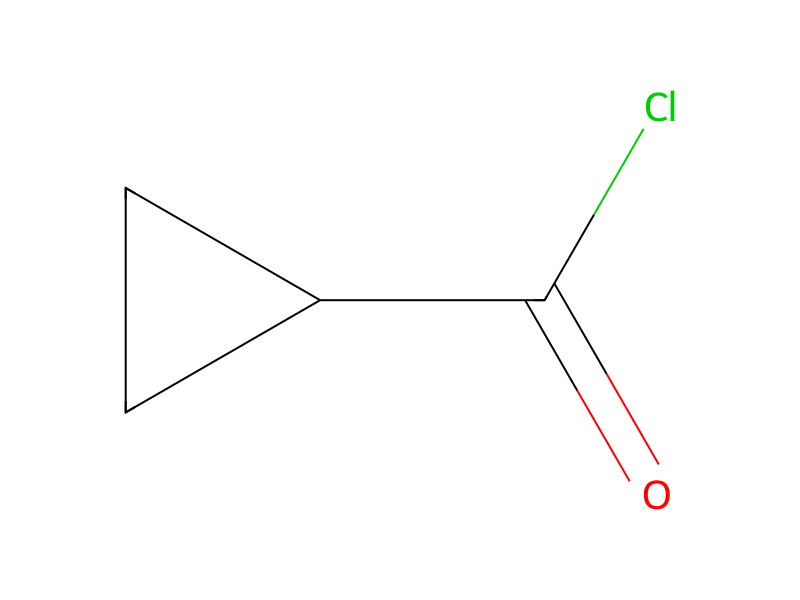
Cyclopropylcarbonyl chloride (1.7 mL, 18 mmol) was added dropwise during 15 minutes to an ice cold mixture containing (S)-3-(2,6-dimethylphenoxymethyl)piperidine hydrochloride (4.4 g, 17 mmol), aqueous sodium bicarbonate (75 mL), and ethyl acetate (100 mL). After the addition was complete, the reaction was stirred at room temperature for 1 hour, and the resulting ethyl acetate layer was separated and concentrated. The residue was dissolved in dry tetrahydrofuran (125 mL) under a dry nitrogen atmosphere and a 1M solution of lithium aluminum hydride in tetrahydrofuran (18.9 mL) was added dropwise. When the addition was complete, the reaction mixture was heated to reflux for 2 hours, then cooled to room temperature. Solid sodium sulfate decahydrate (10 g) was slowly added with stirring and the mixture was filtered. The filtrate was concentrated and chromatographed on silica gel, eluting with acetone/hexanes (1:3) to give (S)-1-cyclopropylmethyl-3-(2,6-dimethylphenoxymethyl)-piperidine as an oil.