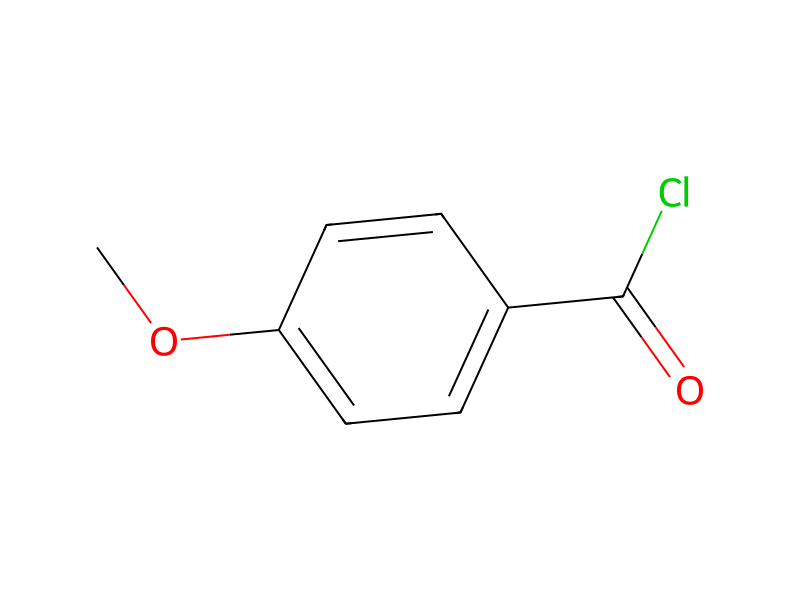
[NH2:1][C:2]1[C:3](=[O:14])[C:4]2[C:9]([C:10](=[O:13])[C:11]=1Cl)=[CH:8][CH:7]=[CH:6][CH:5]=2.[CH3:15][O:16][C:17]1[CH:25]=[CH:24][C:20]([C:21](Cl)=[O:22])=[CH:19][CH:18]=1.S(=O)(=O)(O)O>ClCCl>[O:14]=[C:3]1[C:2]2[N:1]=[C:21]([C:20]3[CH:24]=[CH:25][C:17]([O:16][CH3:15])=[CH:18][CH:19]=3)[O:22][C:11]=2[C:10](=[O:13])[C:9]2[CH:8]=[CH:7][CH:6]=[CH:5][C:4]1=2To a solution of 5.0 g (24 mmol) of 2-amino-3-chloro-1,4-dihydro-1,4-dioxonaphthalene in 80 mL of dichloromethane, one adds, with protection from light and at ambient temperature, 16 mL (120 mmol) of 4-methoxybenzoic acid chloride, then 0.003 mL of concentrated sulfuric acid. After 3 h of reflux, the reaction mixture is evaporated to dryness; the black oily residue obtained is redissolved in 300 mL of dichloromethane, washed with a solution of 10N sodium hydroxide, then with water, and finally dried over calcium chloride. The product is then purified on a flash column (support: silica 6-35 mm; conditioning: heptane; eluant: dichloromethane/heptane, 60/40), to produce 4.1 g of 4,9-dihydro-4,9-dioxo-2-(4-methoxyphenyl)-naphtho[2,3-d]oxazole in the form of yellow-orangish crystals after recrystallization and color removal with animal charcoal.