Potassium Hydroxide → 2-Cyclopropylmethylthio-pyrrole
HRID 1389126
Reaktionsgleichung

[S:1]([C:4]1[NH:5][CH:6]=[CH:7][CH:8]=1)[C:2]#N.[CH:9]1(CBr)[CH2:11][CH2:10]1.[OH-].[K+]>CO>[CH:9]1([CH2:2][S:1][C:4]2[NH:5][CH:6]=[CH:7][CH:8]=2)[CH2:11][CH2:10]1Komponenten
5
Edukt 3

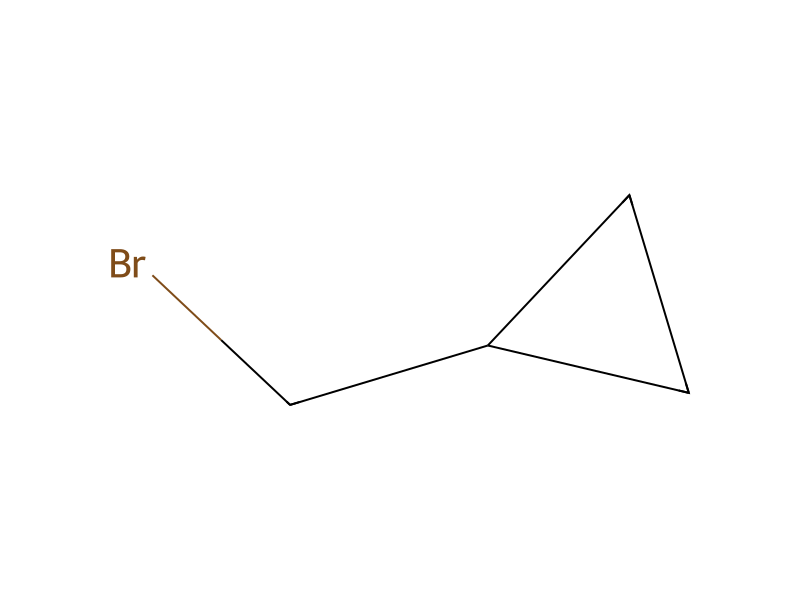

Produkt 1

Reagenzien, Katalysatoren, Lösungsmittel 1

Versuchsvorschrift
A solution of 2-thiocyanopyrrole (12.4 g., 0.1 mole) and cyclopropylmethyl bromide (14.85 g., 0.11 mole) in methanol (500 ml.) was cooled below 0° (ice-salt bath), and stirred vigorously under nitrogen while a solution of potassium hydroxide (12.3 g., 0.22 mole) in 1:1 (by volume) aqueous methanol (400 ml.) was added dropwise during 0.75 hours. The cooling bath was removed and stirring continued for 1.5 hours before neutralization of the excess alkali with solid carbon dioxide. The reaction mixture was poured into 20% brine (500 ml.) and extracted with methylene chloride (3×100 ml.). The combined organic extracts were dried (Na2SO4 +K2CO3), then evaporated in vacuo to provide a red oil (12.1 g.). Distillation of this crude oil afforded 2-cyclopropylmethylthio-pyrrole as a colorless oil (5.8 g. 38%), B.P. 138°-141° at 11 mm. (B) The product from Part A was reacted with ethyl oxalyl chloride as described in Example 39, Part B. Chromatography on silica followed by recrystallization from petroleum ether (B.P. 40°-60°) and hexane gave 5-cyclopropylmethylthio-2-pyrrolylglyoxylic acid ethyl ester as a yellow solid, M.P. 46°. Found: C, 56.81; H, 6.23; N, 5.38. C12H15NO3S requires: C, 56.89; H, 5.97; N, 5.53%.