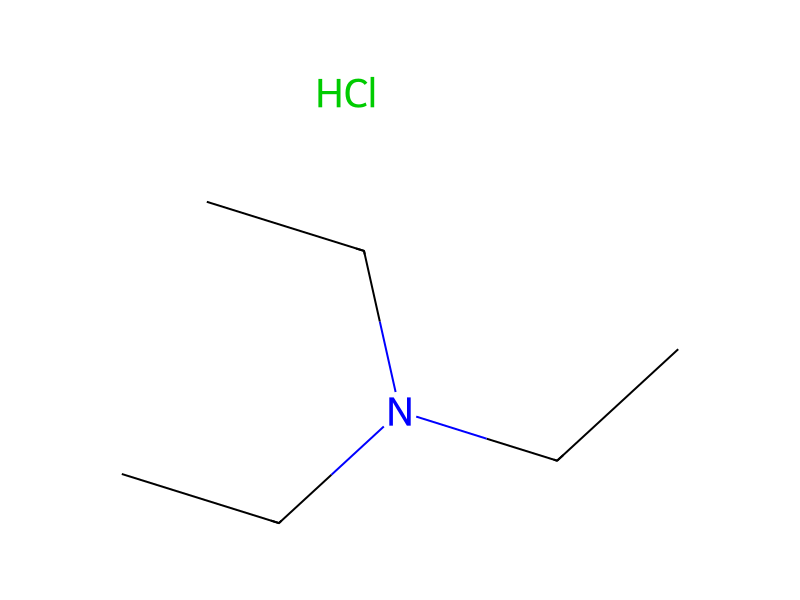
Forty-six and thirty-seven hundredths grams (a 10% excess) of 3,3-diphenylpropionic acid chloride in 120 ml tetrahydrofuran are placed into a 500 ml round-bottom flask which is equipped with a mechanical agitator. Eighteen and three-tenths grams 2,6-dimethylphenol with 16.7 grams triethylamine in 150 ml tetrahydrofuran are added, dropwise, to this solution while stirring. The mixture is stirred for 12 hours at room temperature. The precipitated triethylamine-hydrochloride is sucked off and the tetrahydrofuran is evaporated in vacuo. The residue is taken up in ether and washed three times with water. The solvent is dried with sodium sulfate and then evaporated in vacuo. There remain 45.0 grams 3,3-diphenylpropionic acid-2,6-dimethylphenyl ester [91.2% yield]. Forty-five grams of this ester are dissolved in a 500 ml flask in 200 ml nitrobenzene. Eighteen and two-tenths grams aluminum chloride are added and the substance is stirred, excluding any humidity, with a KPG agitator. The mixture is heated to 100° C. and the components are left to react at this temperature for 1 day. The nitrobenzene is distilled off in vacuo, the residue is taken up with ether and crushed ice is added. Subsequently, the ether phase is washed well with water, dried with sodium sulfate and the ether is evaporated except for a small amount. Thirty-two grams [71.3%] 4-hydroxy-3,5-dimethyl-β,β-diphenylpropiophenone crystallize out. Ten grams of this compound are dissolved in 80 ml dry acetone for the etherification and 25 grams water-free potash (100% excess) are added. Twelve and twenty-five hundredths grams (200% excess) diethylamine-ethylchloride, dissolved in 150 ml acetone, are added dropwise, with the exclusion of humidity, to this solution. The solution is boiled under reflux for 1 day. The potash is filtered off, the acetone evaporated in vacuo and the residue taken up in ether. The ether solution is washed in water and dried with sodium sulfate. The hydrochloride salt is precipitated with ethereal hydrochloric acid. After recrystallization from a methanol/ether solution, 9.55 grams [67.8%] 4-[2-(N,N-diethylamino)-ethoxy] -3,5-dimethyl-β,β-diphenylpropiophenone hydrochloride (Melting point of 95°-97° C.) and 4-[2-(N,N-diethylamino)-ethoxy] -3,5-dimethyl-β,β-diphenylpropiophenone fumarate (Melting point 226° C. [decomposition]), are obtained.