Reaktionsgleichung

[CH3:1][O:2][C:3](=[O:10])[CH2:4][CH2:5][C:6]([CH2:8]Cl)=[O:7]>CO>[C:3]([OH:10])(=[O:2])[CH2:4][CH2:5][C:6]([CH3:8])=[O:7].[CH3:1][O:2][C:3](=[O:10])[CH2:4][CH2:5][C:6]([CH3:8])=[O:7]Komponenten
Edukt 1

Produkt 2
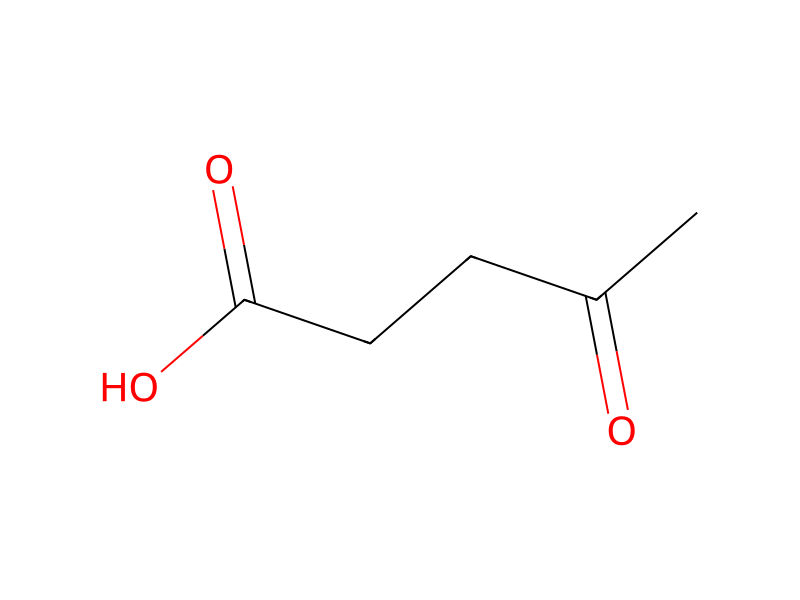
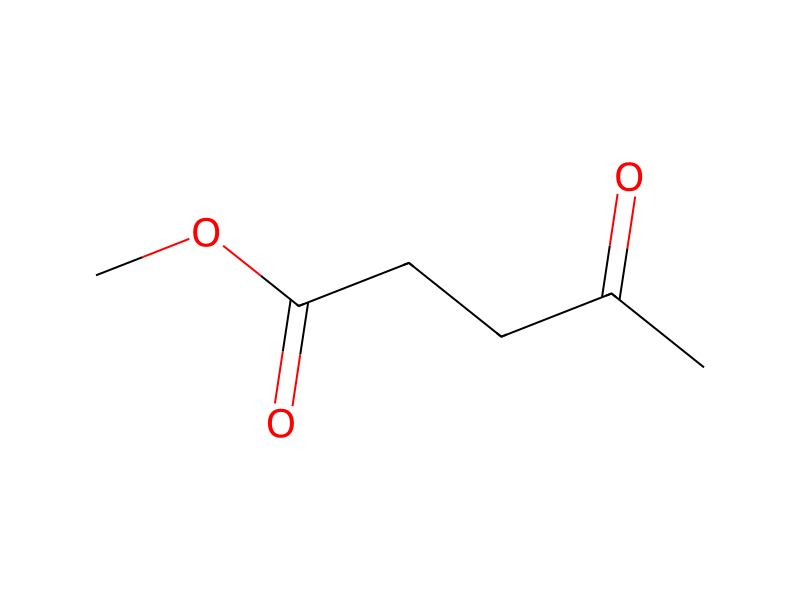
Reagenzien, Katalysatoren, Lösungsmittel 1

Versuchsvorschrift
In connection with this it is remarkable, that the 5-chlorolevulinic acid methyl ester can be also selectively produced by means of low temperature crystallisation from the chlorination mixture, which you get from the bromination mixture of levulinic acid or levulinic acid methyl ester in methanol and the subsequent bromine/chlorine exchange, in a gentle manner as already described for the 5-bromolevulinic acid methyl ester. As in the case of the 5-bromolevulinic methyl ester you proceed in the same way by using the same solvents and solvent mixtures and temperatures between −20° C. and −40° C. You get the 5-chlorolevulinic acid methyl ester in 35–38% yield and >98 purity. Impurities are the 3-chlorolevulinic acid methyl ester and the unconverted levulinic acid methyl ester. The 5-chlorolevulinic acid esters of the alcohols with chain lengths of C2–C4 can not be produced by low-temperature crystallisation because no crystallisation occurs under these conditions. The same is valid for the corresponding bromination mixtures of the 5-bromolevulinic acid esters which are produced from alcohols with chain lengths of C2–C4.
Aufarbeitung
- customcan be also selectively produced by means of low temperature crystallisation from the chlorination mixture, which you
Quellen und Nachweise
- ORD-Eintrag
- ord-f1386be11d0449d5a6ea388f7655d842
- Quelldatensatz
- uspto-grants-2008_03
- Patentnummer
- US07339073B2
Verknüpfte Notizen
Wird geladen…