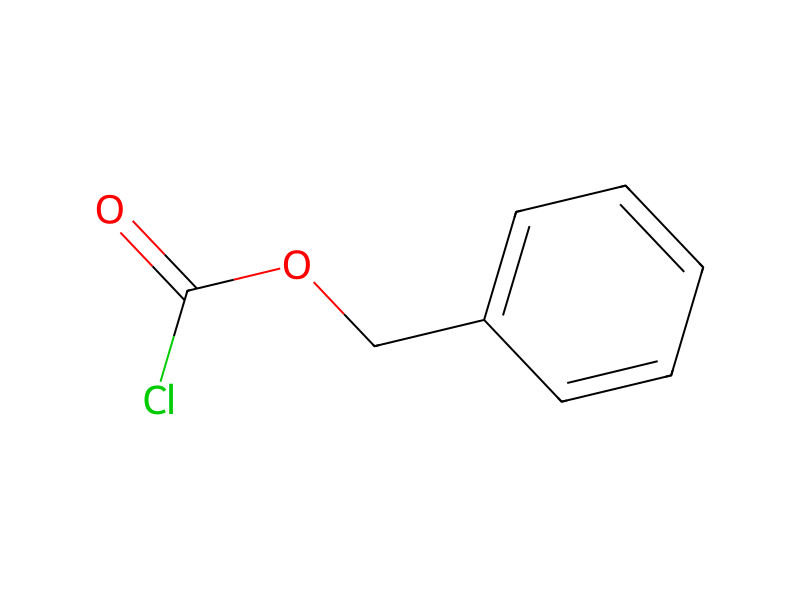
Benzyl chloroformate → Z-His(Z)-OH
HRID 1395143
Reaktionsgleichung

[NH2:1][C@H:2]([C:9]([OH:11])=[O:10])[CH2:3][C:4]1[N:8]=[CH:7][NH:6][CH:5]=1.[C:12](Cl)([O:14][CH2:15][C:16]1[CH:21]=[CH:20][CH:19]=[CH:18][CH:17]=1)=[O:13]>>[C:12]([N:6]1[CH:7]=[N:8][C:4]([CH2:3][C@@H:2]([C:9]([OH:11])=[O:10])[NH:1][C:12]([O:14][CH2:15][C:16]2[CH:21]=[CH:20][CH:19]=[CH:18][CH:17]=2)=[O:13])=[CH:5]1)([O:14][CH2:15][C:16]1[CH:21]=[CH:20][CH:19]=[CH:18][CH:17]=1)=[O:13]Komponenten
3


Versuchsvorschrift
According to the original literature procedure of A. Patchornik et al. (J.A.C.S., 79, 6416/1957), 1,N-dicarbobenzoxy-L-histidine was prepared by the reaction of L-histidine with carbobenzoxy chloride.
Quellen und Nachweise
- ORD-Eintrag
- ord-64819d3d6ada41fb94afa3629310b681
- Quelldatensatz
- uspto-grants-1980_05
- Patentnummer
- US04202873