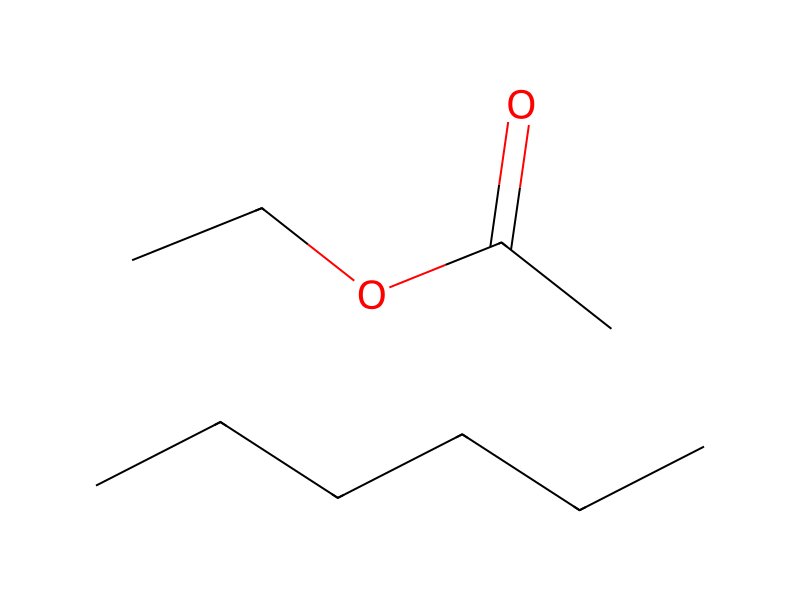
[OH:1][C:2]1[CH:7]=[C:6]([OH:8])[C:5]([CH:9]([CH3:11])[CH3:10])=[CH:4][C:3]=1[C:12](=[O:14])[CH3:13].[C:15](#N)C.C(=O)([O-])[O-].[K+].[K+].[CH2:24](Br)[C:25]1[CH:30]=[CH:29][CH:28]=[CH:27][CH:26]=1.CCOC(C)=O.[CH3:38][CH2:39][CH2:40][CH2:41][CH2:42][CH3:43]>>[CH2:24]([O:1][C:2]1[CH:7]=[C:6]([O:8][CH2:15][C:40]2[CH:39]=[CH:38][CH:43]=[CH:42][CH:41]=2)[C:5]([CH:9]([CH3:11])[CH3:10])=[CH:4][C:3]=1[C:12](=[O:14])[CH3:13])[C:25]1[CH:30]=[CH:29][CH:28]=[CH:27][CH:26]=1To a mixture of 1-(2,4-dihydroxy-5-isopropyl-phenyl)-ethanone (3.2 g), acetonitrile (60 ml) and potassium carbonate (10.6 g) in a 250 ml single neck RB flask equipped with a reflux condenser and a guard tube was added benzyl bromide (9.1 ml). The reaction mixture was refluxed (90° C.) for 16 h. The progress of the reaction was monitored by TLC (10% EtOAc/n-hexane, product Rf˜0.5). On completion, acetonitrile was removed under reduced pressure. Water (100 ml) was added to the residue obtained and the resulting mixture was extracted with ethyl acetate (200 ml). The organic layer was dried over sodium sulphate. The solvent was removed under reduced pressure to give a residue to which n-hexane (150 ml) was added to give the product.