StartseiteMCPWorkbenchSkills
StartseiteWorkbenchBenachrichtigungenMein Bereich
llms.txt · MCP-AnleitungDatenschutz · Nutzungsbedingungen · Supportv1.8.0
  1. Startseite
  2. /Reaktion

1,3-Diethyl 2-oxopropanedioate → Ethyl 6,7-dichloro-3-hydroxyquinoxaline-2-carboxylate

HRID 1414078
Notizen
Druckvorschau

Reaktionsgleichung

Reaktionsgleichung von HRID 1414078
[Cl:1][C:2]1[C:7]([Cl:8])=[CH:6][C:5]([NH2:9])=[C:4]([NH2:10])[CH:3]=1.O=[C:12]([C:18](OCC)=[O:19])[C:13]([O:15][CH2:16][CH3:17])=[O:14]>C(O)C>[Cl:1][C:2]1[CH:3]=[C:4]2[C:5](=[CH:6][C:7]=1[Cl:8])[N:9]=[C:12]([C:13]([O:15][CH2:16][CH3:17])=[O:14])[C:18](=[O:19])[NH:10]2
KomponentenVersuchsvorschriftAufarbeitungQuellen und NachweiseNotizen zur Reaktion

Komponenten

4

Edukt 2

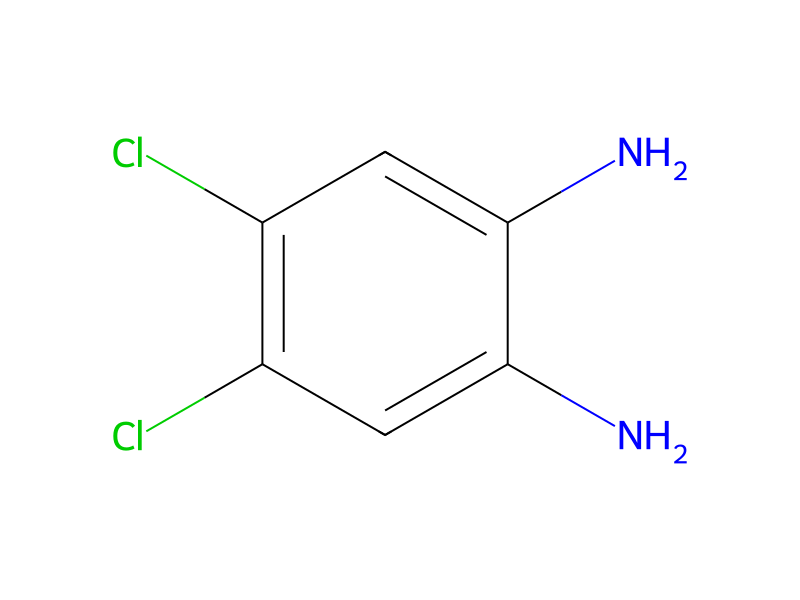
HCID 691051,3-Diethyl 2-oxopropanedioateHCID 792974,5-Dichloro-1,2-phenylenediamine

Produkt 1

HCID 6320212Ethyl 6,7-dichloro-3-hydroxyquinoxaline-2-carboxylate

Reagenzien, Katalysatoren, Lösungsmittel 1

HCID 702EthanolLösungsmittel

Versuchsvorschrift

A solution of 17.7 g. of 4,5-dichloro-o-phenylenediamine and 200 ml. of anhydrous ethanol was prepared. A 17.4 g. batch of diethyl 2-keto-malonate was added to this solution and the mixture was heated to refluxing temperature for about 17 hours. The volatile constituents were removed by evaporation in vacuo. Recrystallization of the residue from ethanol yielded 20 g. of ethyl 6,7-dichloro-3,4-dihydro-3-oxo-2-quinoxaline carboxylate formed in the above reaction; melting in the range 226°-227° C.

Aufarbeitung

  1. temperaturethe mixture was heated
  2. temperatureto refluxing temperature for about 17 hours
  3. customThe volatile constituents were removed by evaporation in vacuo
  4. customRecrystallization of the residue from ethanol
  5. customyielded 20 g

Quellen und Nachweise

ORD-Eintrag
ord-9d7af4864aa945d8b64aadf1d2e5340a
Quelldatensatz
uspto-grants-1981_02
DOI
10.6084/m9.figshare.5104873.v1
Patentnummer
US04252954

Notizen zur Reaktion

Wird geladen…

Auf dieser SeiteKomponentenVersuchsvorschriftAufarbeitungQuellen und NachweiseNotizen zur Reaktion