Benzoyl isothiocyanate → HCID 21397156, Verbindung
HRID 1414735
Reaktionsgleichung

[CH3:1][N:2]1[CH2:7][CH2:6][N:5]([CH2:8][CH2:9][CH2:10][NH:11][C:12]2[CH:17]=[CH:16][CH:15]=[CH:14][C:13]=2[NH2:18])[CH2:4][CH2:3]1.[C:19]([N:27]=[C:28]=S)(=[O:26])[C:20]1[CH:25]=[CH:24][CH:23]=[CH:22][CH:21]=1>C(O)C>[CH3:1][N:2]1[CH2:3][CH2:4][N:5]([CH2:8][CH2:9][CH2:10][N:11]2[C:12]3[CH:17]=[CH:16][CH:15]=[CH:14][C:13]=3[N:18]=[C:28]2[NH:27][C:19](=[O:26])[C:20]2[CH:25]=[CH:24][CH:23]=[CH:22][CH:21]=2)[CH2:6][CH2:7]1Komponenten
4
Edukt 2
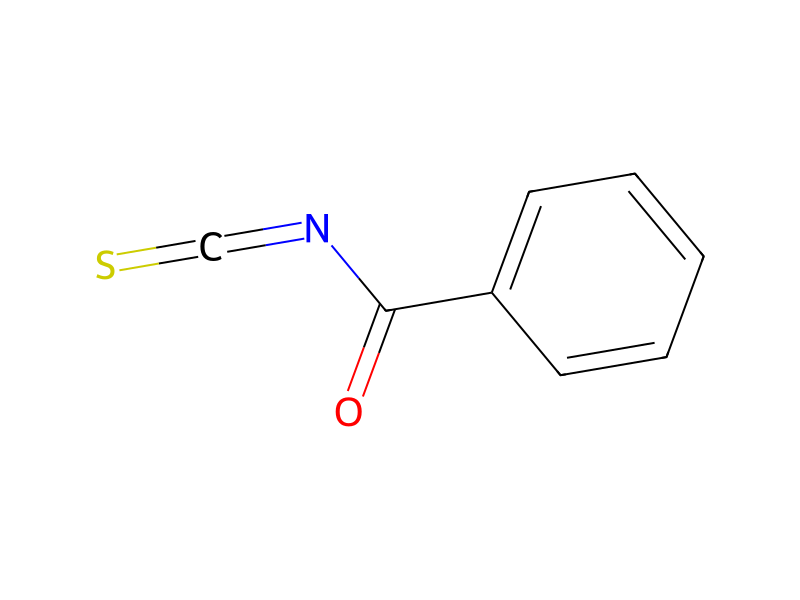

Produkt 1

Reagenzien, Katalysatoren, Lösungsmittel 1

Versuchsvorschrift
To a solution of N-[3-(4-methyl-1-piperazinyl)propyl]-o-phenylenediamine (1.24 g., 0.005 mole) in ethanol (50 ml.) was added 0.82 g. (0.005 mole) benzoyl isothiocyanate in one portion. After stirring overnight at room temperature, the solution was evaporated in vacuo to a red oil, which was chromatographed on a silica gel column yielding on crystallization from ethyl acetate 390 mg. of 1-[3-(4-methyl-1-piperazinyl)propyl]-2-benzamido-benzimidazole (yield 20.6%), m.p. 147°-148° C. The material isolated by this synthesis was identical in all respects to an authentic sample.