Reaktionsgleichung

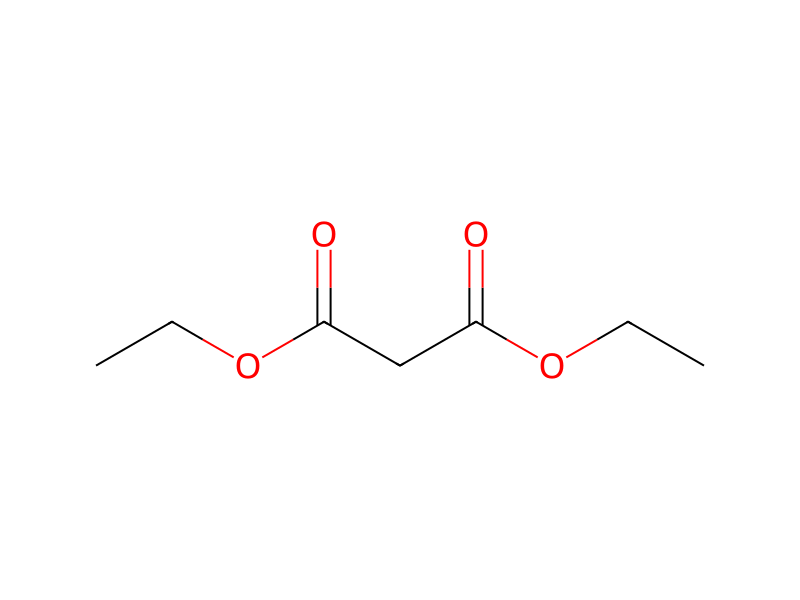
ClC1C(F)=C(C=CC=1F)C(Cl)=O.C(OCC)(=O)CC(OCC)=O.[Cl:24][C:25]1[C:26]([F:45])=[C:27]([CH:41]=[CH:42][C:43]=1[F:44])[C:28]([CH:30]([C:36]([O:38][CH2:39][CH3:40])=O)[C:31]([O:33][CH2:34][CH3:35])=[O:32])=[O:29].ClC1C(F)=C(C=CC=1F)C(CC(OCC)=O)=O.C([O-])([O-])OCC.C(OC(=O)C)(=O)C>>[Cl:24][C:25]1[C:26]([F:45])=[C:27]([CH:41]=[CH:42][C:43]=1[F:44])[C:28]([C:30](=[CH:36][O:38][CH2:39][CH3:40])[C:31]([O:33][CH2:34][CH3:35])=[O:32])=[O:29]Komponenten
Edukt 5


Produkt 1

Versuchsvorschrift
Reaction of 3-chloro-2,4-difluoro-benzoyl chloride with diethyl malonate gives diethyl (3-chloro-2,4-difluoro-benzoyl)-malonate, and partial hydrolysis and decarboxylation lead to ethyl (3-chloro-2,4-difluoro-benzoyl)-acetate, which is reacted with ethyl orthoformate/acetic anhydride to give ethyl 2-(3-chloro-2,4-difluorobenzoyl)-3-ethoxy-acrylate; further reaction with cyclopropylamine leads to ethyl 2-(3-chloro-2,4-difluoro-benzoyl)-3-cyclopropylaminoacrylate, which is cyclized with potassium carbonateldimethylformamide to give ethyl 8-chloro-1-cyclopropyl-7-fluoro-1,4-dihydro-4-oxo-3-quinolinecarboxylate; hydrolysis then finally leads to the corresponding carboxylic acid. The reaction sequence described can be represented by the following equation: ##STR4## The quinolonecarboxylic acid obtained in the 6th stage can be converted by reaction with compounds Z--H of the formulae ##STR5## wherein R1 represents hydrogen, straight-chain or branched C1 -C3 -alkyl or cyclopropyl,
Aufarbeitung
- customgives
Quellen und Nachweise
- ORD-Eintrag
- ord-6b9919477f6547a1aa499d6f7d465975
- Quelldatensatz
- uspto-grants-2000_06
- Patentnummer
- US06075165
Verknüpfte Notizen
Wird geladen…