Reaktionsgleichung

[F:1][C:2]1[CH:7]=[CH:6][C:5]([C:8]([C:10]([C:12]2[CH:17]=[CH:16][C:15]([F:18])=[CH:14][CH:13]=2)=O)=O)=[CH:4][CH:3]=1.[C:19]1([NH2:26])[CH:24]=[CH:23][CH:22]=[CH:21][C:20]=1[NH2:25]>C(Cl)(Cl)Cl>[F:1][C:2]1[CH:7]=[CH:6][C:5]([C:8]2[C:10]([C:12]3[CH:17]=[CH:16][C:15]([F:18])=[CH:14][CH:13]=3)=[N:26][C:19]3[C:20](=[CH:21][CH:22]=[CH:23][CH:24]=3)[N:25]=2)=[CH:4][CH:3]=1Komponenten
4
Edukt 2
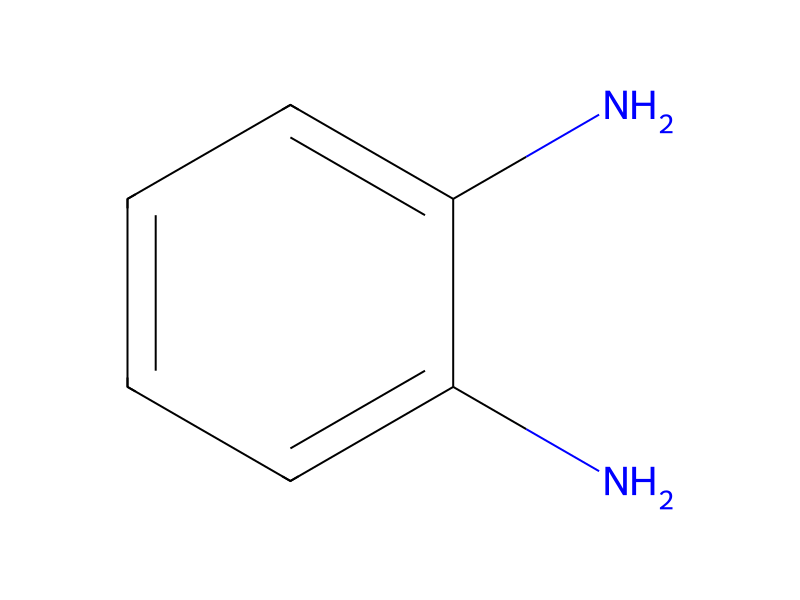

Produkt 1

Reagenzien, Katalysatoren, Lösungsmittel 1

Versuchsvorschrift
First, 4,4′difluorobenzil of 3.71 g and o-phenylenediamine of 1.71 g are heated and agitated in chloroform solvent of 200 mL for 6 hours. The reaction solution is back to a room temperature, cleaned by 1NHCl and saturated salt solution, and dried by magnesium sulfate. By evapolating the solvent, a ligand HFdpq [2,3-bis(4-fluorophenyl)quinoxaline] is obtained (light yellow powder, yield is 99%). A synthesis scheme and a structural formula of the lignad HFdpq are shown in the following formula (2).
Aufarbeitung
- customis back to a room temperature
- dry with materialdried by magnesium sulfate
Quellen und Nachweise
- ORD-Eintrag
- ord-6959d468cc364e8d9be408c082aaa26e
- Quelldatensatz
- uspto-grants-2009_11
- Patentnummer
- US07622200B2
Verknüpfte Notizen
Wird geladen…