Reaktionsgleichung

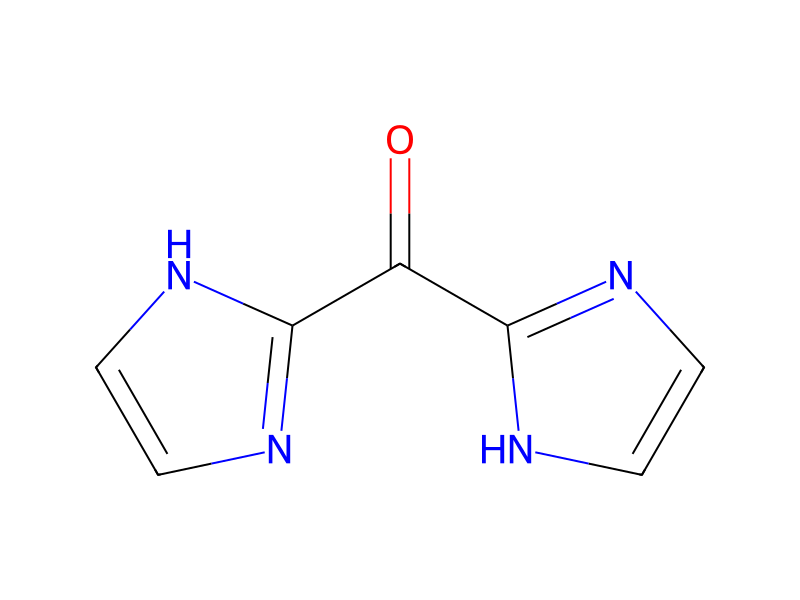
N1C2C(=CC(C(O)=O)=CC=2)N=CC=1.N1CCCCC1.[N:20]1[C:29]2[C:24](=[CH:25][C:26]([C:30]([N:32]3[CH2:37][CH:36]=[CH:35][CH2:34][CH2:33]3)=[O:31])=[CH:27][CH:28]=2)[N:23]=[CH:22][CH:21]=1.C(C1NC=CN=1)(C1NC=CN=1)=O>>[N:20]1[C:29]2[C:24](=[CH:25][C:26]([C:30]([N:32]3[CH2:37][CH2:36][CH2:35][CH2:34][CH2:33]3)=[O:31])=[CH:27][CH:28]=2)[N:23]=[CH:22][CH:21]=1Komponenten
5




Versuchsvorschrift
The coupling of 6-quinoxalinecarboxylic acid to piperidine is accomplished in a manner similar to that used for the preparation of Invention Compound XIII, or by any other method known in the art for activation of aromatic carboxylic acids, such as, for example, activation by carbonyl diimidazole. 1H NMR δ 1.56 and 1.73 (br, 6), 3.40 (br s, 2), 3.79 (br s, 2), 7.82 (dd, 1, J=8.8, 1.9 Hz), 8.13 (d, 1, J=1.6 Hz), 8.17 (d, 1, 8.6 Hz), and 8.9 ppm (m, 2).
Quellen und Nachweise
- ORD-Eintrag
- ord-07b37a91766e4329953fb8f1ee583032
- Quelldatensatz
- uspto-grants-1998_12
- Patentnummer
- US05852008
Verknüpfte Notizen
Wird geladen…