StartseiteMCPSkillsWorkbenchOpenChem
StartseiteWorkbenchBenachrichtigungenMein Bereich
llms.txt · skill.md · MCP-AnleitungDatenschutz · Nutzungsbedingungen · Supportv1.8.4
  1. Startseite
  2. /Reaktion

Sodium Hydroxide → (4S)-6-chloro-1,1-dioxo-3,4-dihydro-2H-thieno(3,2-e)thiazin-4-ol

HRID 1489820
Drucken

Reaktionsgleichung

[C:1]([C:4]1[CH:8]=[C:7]([Cl:9])[S:6][C:5]=1[S:10]([NH:13][C:14]1C=CC(CCO)=CC=1)(=[O:12])=[O:11])(=[O:3])C.B(Cl)([C@@H]1[C@@H](C)C2C(C)(C)C(C2)C1)[C@@H]1[C@@H](C)C2C(C)(C)C(C2)C1.[OH-].[Na+]>CC(OC)(C)C>[Cl:9][C:7]1[S:6][C:5]2[S:10](=[O:11])(=[O:12])[NH:13][CH2:14][C@@H:1]([OH:3])[C:4]=2[CH:8]=1
KomponentenReaktionsbedingungenVersuchsvorschriftAufarbeitungQuellen und NachweiseNotizen zur Reaktion

Komponenten

5

Edukt 3

HCID 14798Sodium HydroxideHCID 229019243-Acetyl-5-chloro-N-[4-(2-hydroxyethyl)phenyl]-thiophene-2-sulfonamideHCID 86810452(+)-B-Chlorodiisopinocampheylborane

Produkt 1

HCID 11746721(4S)-6-chloro-1,1-dioxo-3,4-dihydro-2H-thieno(3,2-e)thiazin-4-ol

Reagenzien, Katalysatoren, Lösungsmittel 1

HCID 15413
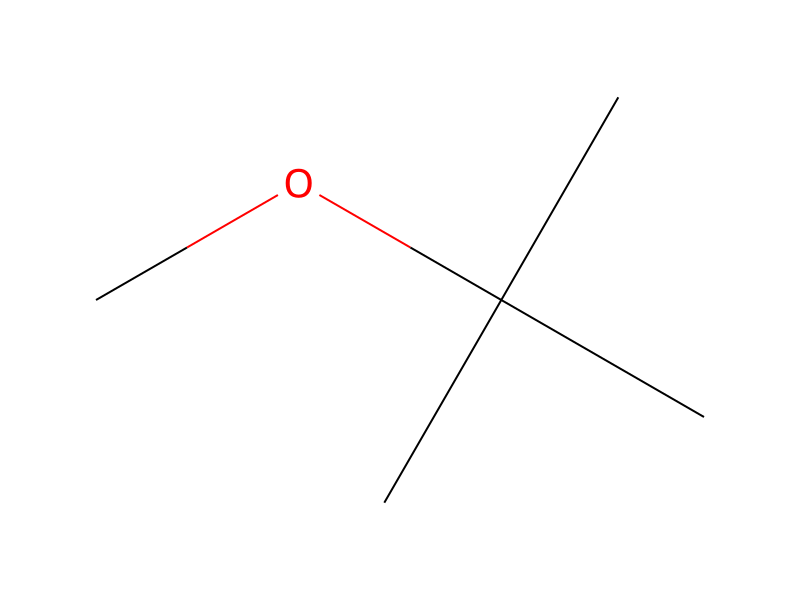
tert-Butyl methyl ether
Lösungsmittel
2×

Reaktionsbedingungen

Temperatur
-40 °C

Versuchsvorschrift

A 50-L, 5-necked flask equipped with a mechanical stirrer and a thermometer was flushed with nitrogen overnight. Working under nitrogen, the flask was charged with the product from Step B (855 g, 2.68 mol) and t-butyl methyl ether (MTBE, 12.5 L). The stirred suspension was cooled to -40° C. using a dry-ice/2-propanol bath and (+)-β-chlorodiisopino-campheylborane (4.5 L of a 1.2M solution in MTBE, 5.4 mol) was added via a cannula over 30 minutes, causing the temperature to rise to -32° C. The reaction mixture was maintained between -25° to -20° C. for 3.5 hours. The mixture was warmed to 0° C. and 1M sodium hydroxide (11 L) was added from an addition funnel over 10 minutes, causing the temperature to rise to 22° C. The biphasic mixture was stirred vigorously at ambient temperature for 2 hours, after which TLC analysis indicated complete cyclization. The phases were split, and the dark aqueous layer was extracted with t-butyl methyl ether (3 L), acidified to pH 1 using concentrated hydrochloric acid, and extracted with ethyl acetate (2×4 L). The combined ethyl acetate extracts were washed with saturated aqueous sodium chloride (3 L), dried over sodium sulfate (1 kg), filtered, and concentrated to a volume of about 1 liter by rotary evaporation, at which point toluene (2 L) was added. As the remainder of the ethyl acetate was removed, the product crystallized from toluene. It was collected by filtration, washed with toluene (2 L) and methylene chloride (2 L, and dried in air at ambient temperature (498 grams, 77%): mp 126°-127° C.; [α]25D -5.9° (c=1, CH3OH). Analysis. Calculated for C6H6ClNO3S2 : C, 30.06; H, 2.52; N, 5.84. Found: C, 30.14; H, 2.56; N, 5.80.


Aufarbeitung

  1. customa thermometer was flushed with nitrogen overnight
  2. customto rise to -32° C
  3. temperatureThe reaction mixture was maintained between -25° to -20° C. for 3.5 hours
  4. temperatureThe mixture was warmed to 0° C.
  5. customto rise to 22° C
  6. customThe phases were split
  7. extractionthe dark aqueous layer was extracted with t-butyl methyl ether (3 L)
  8. extractionextracted with ethyl acetate (2×4 L)
  9. washThe combined ethyl acetate extracts were washed with saturated aqueous sodium chloride (3 L)
  10. dry with materialdried over sodium sulfate (1 kg)
  11. filtrationfiltered
  12. concentrationconcentrated to a volume of about 1 liter by rotary evaporation, at which point toluene (2 L)
  13. additionwas added
  14. customAs the remainder of the ethyl acetate was removed
  15. customthe product crystallized from toluene
  16. filtrationIt was collected by filtration
  17. washwashed with toluene (2 L) and methylene chloride (2 L
  18. customdried in air at ambient temperature (498 grams, 77%)

Quellen und Nachweise

ORD-Eintrag
ord-a4cf96d1a41240128f39cf872af935f4
Quelldatensatz
uspto-grants-1997_10
DOI
10.6084/m9.figshare.5104873.v1
Patentnummer
US05679670

Notizen zur Reaktion

Auf dieser SeiteKomponentenReaktionsbedingungenVersuchsvorschriftAufarbeitungQuellen und NachweiseNotizen zur Reaktion