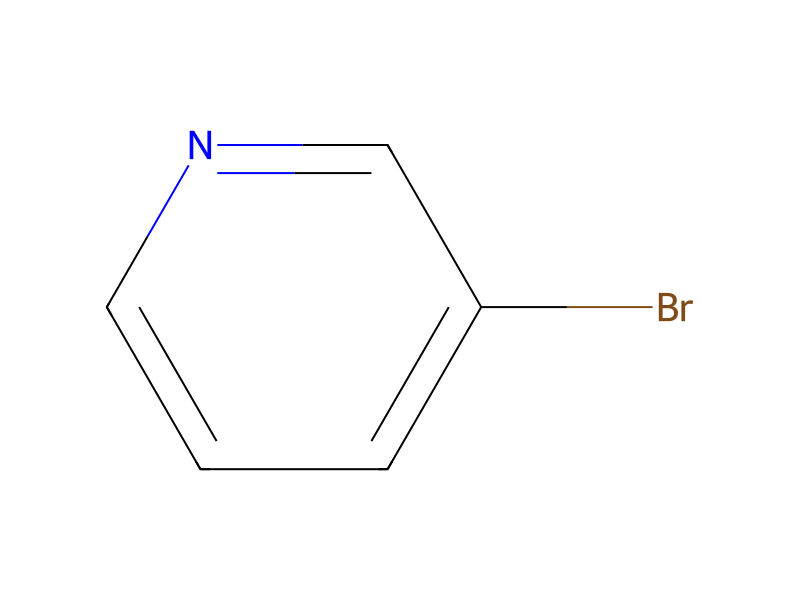
[C:1]([CH2:3][CH2:4][CH2:5][CH:6]([CH2:14][CH:15]=[CH2:16])[CH2:7][CH2:8][C:9]([O:11][CH2:12][CH3:13])=[O:10])#[N:2].C(#N)C.Br[C:21]1[CH:22]=[N:23][CH:24]=[CH:25][CH:26]=1>C(N(CC)CC)C>[C:1]([CH2:3][CH2:4][CH2:5][CH:6]([CH2:14][CH:15]=[CH:16][C:21]1[CH:22]=[N:23][CH:24]=[CH:25][CH:26]=1)[CH2:7][CH2:8][C:9]([O:11][CH2:12][CH3:13])=[O:10])#[N:2]A mixture of 1300 g of ethyl 4-(3-cyanopropyl)-6-heptenoate, 6397 ml of acetonitrile, 3190 mL of triethylamine and 920.9 g of 3-bromopyridine is degassed and then heated to reflux. Palladium II acetate catalyst (13 g) and 36.42 g of tri-o-tolylphosphine are added and the mixture is heated under reflux overnight. Additional catalyst (13 g) is added and the mixture is again heated under reflux for 7 hours. Further catalyst (6.5 g) is again added and the reaction is again heated under reflux overnight. The reaction mixture is cooled, diluted with 6 L of methylene chloride, and evaporated to dryness. The residue is partitioned between ether and water. The ether layer is separated and the aqueous layer is extracted two more times with ether. The combined ether extracts are extracted with 2×8 L of 1 N hydrochloric acid. The acid extract is cooled and made basic with 1200 ml of conc. ammonium hydroxide to pH 10, and extracted with ether (3×8 L). The ether extract is dried over sodium sulfate and evaporated to dryness to yield ethyl 4-(3-cyanopropyl)-7-(3-pyridyl)-6-heptenoate.