StartseiteMCPWorkbenchSkills
StartseiteWorkbenchBenachrichtigungenMein Bereich
llms.txt · MCP-AnleitungDatenschutz · Nutzungsbedingungen · Supportv1.8.0
  1. Startseite
  2. /Reaktion

Tetrahydrofuran → 1-(2-(3-Phenyl-4-(trifluoromethyl)isoxazol-5-yl)-4,5-dihydronaphtho[2,1-d]thiazol-7-yl)ethane-1,2-diol

HRID 1506484
Notizen
Druckvorschau

Reaktionsgleichung

Reaktionsgleichung von HRID 1506484
[C:1]1([C:7]2[C:11]([C:12]([F:15])([F:14])[F:13])=[C:10]([C:16]3[S:17][C:18]4[C:28]5C(=CC(C=C)=[CH:26][CH:27]=5)[CH2:22][CH2:21][C:19]=4[N:20]=3)[O:9][N:8]=2)[CH:6]=[CH:5][CH:4]=[CH:3][CH:2]=1.C[N+]1([O-])CC[O:35][CH2:34]C1.[CH2:39]1[CH2:43][O:42][CH2:41][CH2:40]1>[Os](=O)(=O)(=O)=O>[C:1]1([C:7]2[C:11]([C:12]([F:15])([F:14])[F:13])=[C:10]([C:16]3[S:17][C:18]4[C:28]5[C:41](=[CH:40][C:39]([CH:43]([OH:42])[CH2:34][OH:35])=[CH:26][CH:27]=5)[CH2:22][CH2:21][C:19]=4[N:20]=3)[O:9][N:8]=2)[CH:6]=[CH:5][CH:4]=[CH:3][CH:2]=1
KomponentenVersuchsvorschriftAufarbeitungQuellen und NachweiseNotizen zur Reaktion

Komponenten

5

Edukt 3

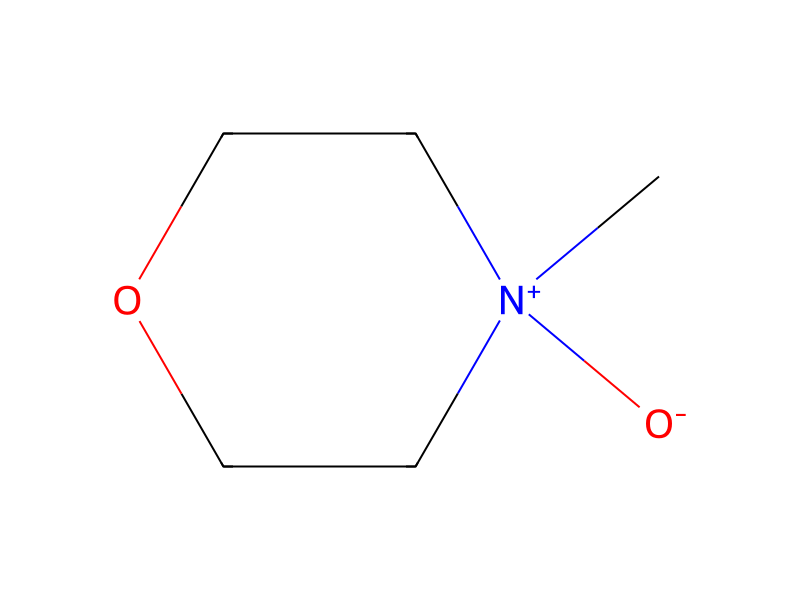
HCID 8028TetrahydrofuranHCID 82029Methyl morpholine oxideHCID 671705843-Phenyl-4-(trifluoromethyl)-5-(7-vinyl-4,5-dihydronaphtho[2,1-d]thiazol-2-yl)isoxazole

Produkt 1

HCID 671707831-(2-(3-Phenyl-4-(trifluoromethyl)isoxazol-5-yl)-4,5-dihydronaphtho[2,1-d]thiazol-7-yl)ethane-1,2-diol

Reagenzien, Katalysatoren, Lösungsmittel 1

HCID 30318
Osmium Tetroxide
Katalysator

Versuchsvorschrift

To 3-phenyl-4-(trifluoromethyl)-5-(7-vinyl-4,5-dihydronaphtho[2,1-d]thiazol-2-yl)isoxazole (Preparation 82E, 0.2 g, 0.471 mmol) in THF (3 mL) were sequentially added osmium tetroxide (4% aq.) (0.148 mL, 0.019 mmol) and NMO (50% aq.) (0.22 mL, 0.471 mmol) at room temperature and the contents were stirred overnight under a nitrogen atmosphere. The same reaction was setup in a different flask. The reaction mixtures from both flasks were combined and concentrated. The residue was partitioned between dichloromethane (40 mL) and water (10 mL). The dichloromethane layer was separated, dried over sodium sulfate and concentrated. To the solid was added acetonitrile (10 mL), the contents were triturated, sonicated and filtered. The solid was washed with acetonitrile (2×3 mL) and dried to yield 240 mgs of a pale yellow solid. The filtrate was concentrated and purified by silica gel column chromatography using an ISCO setup. (24 g, RediSep® silica gel column). The desired fractions were collected and concentrated to yield another 55 mgs of a pale yellow solid. The compound had an HPLC retention time=3.69 min. (condition C); LC/MS M+1=459; 1H NMR (400 MHz, CDCl3) δ ppm 7.66 (2H, d, J=6.6 Hz), 7.48-7.58 (3H, m), 7.41 (1H, d, J=7.7 Hz), 7.28-7.36 (2H, m), 4.82-4.90 (1H, m), 3.83 (1H, ddd, J=11.0, 7.3, 3.5 Hz), 3.71 (1H, td, J=7.5, 4.0 Hz), 3.13-3.25 (4H, m), 2.63 (1H, OH, d, J=3.3 Hz).

Aufarbeitung

  1. customat room temperature
  2. customThe same reaction
  3. customThe reaction mixtures from both flasks
  4. concentrationconcentrated
  5. customThe residue was partitioned between dichloromethane (40 mL) and water (10 mL)
  6. customThe dichloromethane layer was separated
  7. dry with materialdried over sodium sulfate
  8. concentrationconcentrated
  9. additionTo the solid was added acetonitrile (10 mL)
  10. customthe contents were triturated
  11. customsonicated
  12. filtrationfiltered
  13. washThe solid was washed with acetonitrile (2×3 mL)
  14. customdried

Quellen und Nachweise

ORD-Eintrag
ord-f7c6bbeac9f4452da89ca385ece3e560
Quelldatensatz
uspto-grants-2015_12
DOI
10.6084/m9.figshare.5104873.v1
Patentnummer
US09216972B2

Notizen zur Reaktion

Wird geladen…

Auf dieser SeiteKomponentenVersuchsvorschriftAufarbeitungQuellen und NachweiseNotizen zur Reaktion